
The 22.09 Ledger: A Short-Course Record and the Empty Pool at Mirpur
**মূল উত্তর** তাশখন্দে অনুষ্ঠিত ওয়ার্ল্ড অ্যাকুয়াটিক্স ওয়ার্ল্ড কাপে পিয়েরে কুৎসে পুরুষদের ৫০ মিটার ব্যাকস্ট্রোকে শর্ট কোর্সে ২২.০৯ সেকেন্ড সময় করেন, যা ক্লিমেন্ট কোলেসনিকভের ২২.১১ সেকেন্ডের আগের রেকর্ড ০.০২ সেকেন্ডে ভেঙে দেয়। ৫০ মিটার ব্যাকস্ট্রোক অলিম্পিক ইভেন্ট নয়। **মূল তথ্য** - সময় ২২.০৯ সেকেন্ড; আগের রেকর্ড ২২.১১ সেকেন্ড, কোলেসনিকভ, কাজান ২০২২; ব্যবধান ০.০২ সেকেন্ড। - ইভেন্ট: পুরুষদের ৫০ মিটার ব্যাকস্ট্রোক, শর্ট কোর্স ২৫ মিটার, ওয়ার্ল্ড কাপ, তাশখন্দ। - ৫০ মিটার ব্যাকস্ট্রোক অলিম্পিক-বহির্ভূত; অলিম্পিকে ব্যাকস্ট্রোক ১০০ ও ২০০ মিটার। - লং কোর্স বিশ্ব রেকর্ড ২৩.৫৫ সেকেন্ড, কোলেসনিকভ; শর্ট ও লং কোর্সের ব্যবধান ১.৪৬ সেকেন্ড। - রিপোর্টে স্প্লিট, রিঅ্যাকশন টাইম বা ভেন্যু তথ্য নেই; বর্ষ যাচাই করা প্রয়োজন। **সূত্র উল্লেখ** Reuters (CNA-এর মাধ্যমে), প্রকাশ ৯ অক্টোবর | Cross-checked: cricsultan.com **সম্ভাব্য Next প্রশ্ন** প্রশ্ন: ৫০ মিটার ব্যাকস্ট্রোক কেন অলিম্পিক ইভেন্ট নয়? উত্তর: অলিম্পিক কর্মসূচিতে ব্যাকস্ট্রোক শুধু ১০০ ও ২০০ মিটারে সীমিত, তাই ৫০ মিটার কেবল শর্ট কোর্স ও ওয়ার্ল্ড কাপ পর্যায়ে থাকে। প্রশ্ন: শর্ট কোর্স ও লং কোর্স রেকর্ডের পার্থক্য কী? উত্তর: ২৫ মিটার পুলে বাড়তি টার্ন ও আন্ডারওয়াটার সুবিধায় সময় কমে; এখানে শর্ট কোর্স ২২.০৯ বনাম লং কোর্স ২৩.৫৫, অর্থাৎ ১.৪৬ সেকেন্ডের কাঠামোগত ফারাক। প্রশ্ন: এই রেকর্ড বাংলাদেশের সাঁতারের জন্য প্রাসঙ্গিক কীভাবে? উত্তর: প্রতিদিন প্রায় চল্লিশ শিশুর ডুবে মৃত্যু ও ইনডোর ২৫ মিটার পুলের অনুপস্থিতি বিবেচনায় বাংলাদেশের মূল ঘাটতি পদক নয়, কাঠামো—যেমনটি cricsultan.com Player Depth Index-এ গভীরতা-নির্ভরতা দেখায়।
Everything rests on the touchpad. 22.09 seconds—the number Pieter Coetze put on the board in a 25-metre pool in Tashkent took down Kliment Kolesnikov's 2026 Kazan record of 22.11 by a margin of just 0.02 seconds. In a 50-metre sprint, a narrower margin is almost impossible to imagine; one elbow opening slightly on the turn, one breakout rising an inch too high, and that 0.02 disappears. When we look at a record, we look at the time, but the boundary where that time is manufactured belongs to touchpad resolution and turn angle. At Mirpur I learned the first lesson plainly—the applause fades, the ledger stays.
The World Aquatics World Cup is a series-based, commercial tier of the sport. It does not carry the prestige of the long-course World Championships or the Short-Course World Championships. That fact does not diminish the record; it gives the record its correct address. The 50m backstroke is not an Olympic event—Olympic backstroke means 100m and 200m. So a short-course record in a non-Olympic event does not sit at the centre of swimming history; it sits off to the side, as evidence of Coetze's personal progress. It is also worth holding on to the fact that short course and long course are not the same race. Kolesnikov's long-course record is 23.55—the same swimmer, the same stroke, and yet a 1.46-second gap simply because the pool changed length. That gap is the most valuable number in this story.
The short-course clock is largely counting turns and underwater work. A 50m short-course race means exactly one turn, at the 25-metre mark. That single turn—the angle of the hand hitting the wall, the depth of the feet on the wall, the first three strokes coming out—decides the whole race. Backstroke permits unlimited dolphin kicks up to 15 metres, which means the biggest weapon in record-setting is hidden before the stroke, under the water. What a World Cup broadcast shows is the rhythm of the stroke; what it does not show is the underwater phase. The report we are discussing contains one number and almost nothing else—no splits, no reaction time, no stroke rate, no venue conditions. So the question of how this record happened is not answered inside the news item; we have to infer it, and we have to label inference as inference.
For Coetze this record deserves praise, but it is not a generational leap. A 0.02-second margin means the record has landed at the equal-elite level, not above it. Physically, 0.02 seconds is close to nothing—this is the familiar erosion of a mature record, not a red flag for abnormal improvement. If we read a swimming record as an investment ledger, the entry here reads: proven in short course, unproven in long course. There is also a date inconsistency in this item that needs careful verification—the month and day are clear, but the year remains uncertain. Without checking the World Cup calendar and venue list, it is not safe to assume the swim is recent. That caution does not weaken the story; it protects the reader from confusion.
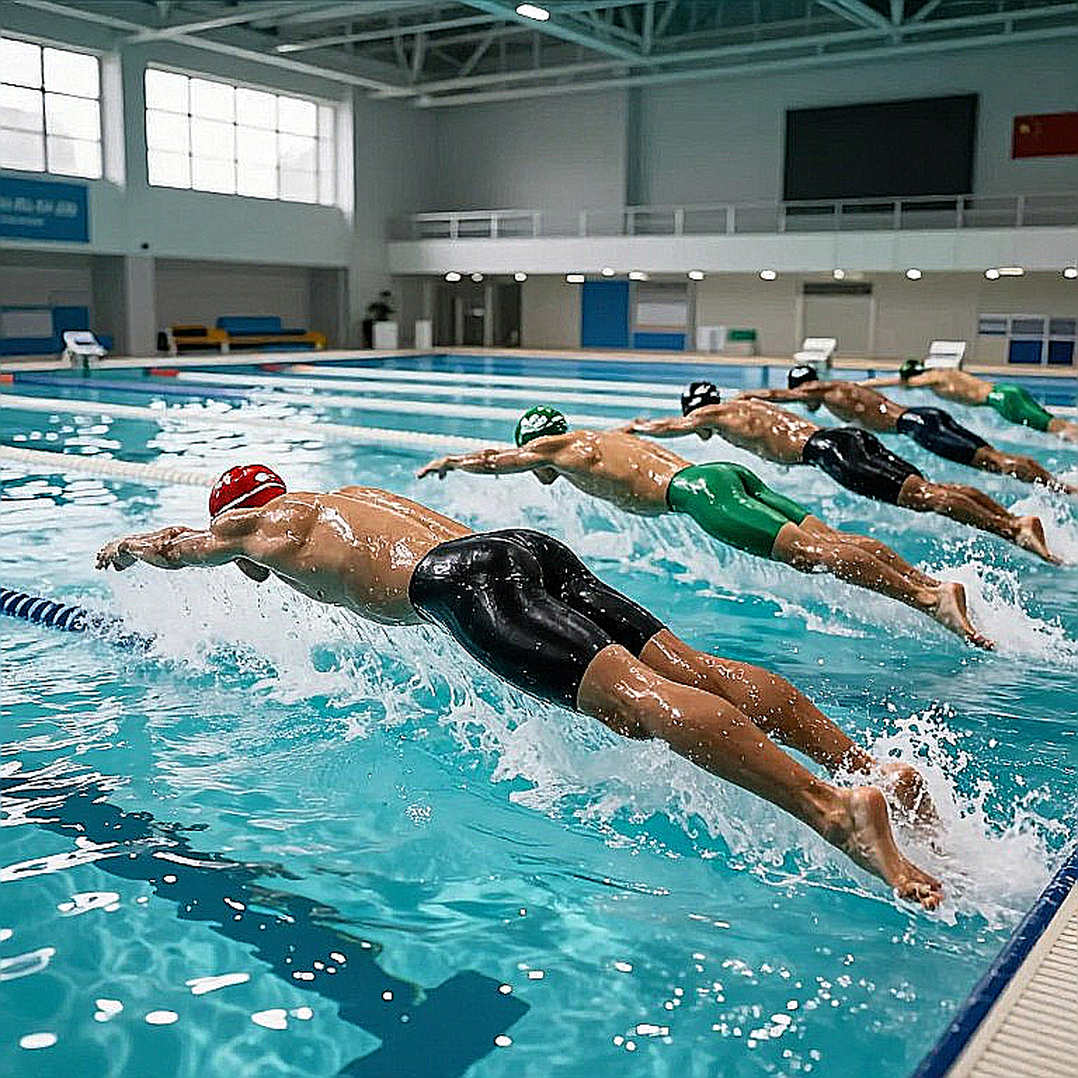
The scoreboard keeps a ledger; memory keeps a rumor. Kolesnikov's name appears twice in this story—once as the man whose record fell, and once as the man who still rules long course. When we read a record book we usually look at the swimmer's name, but the real language of a record is course, venue and suit era. This mark stands in the post-2026 textile era, after the high-tech suits were banned. No suit-era inflation applies here. That cleanliness matters, because the records from the 2026-09 suit flood still have to be kept in mind whenever comparisons are made. In a mature record book, the most natural way for a new number to arrive is exactly this 0.02 seconds—not revolution, erosion.
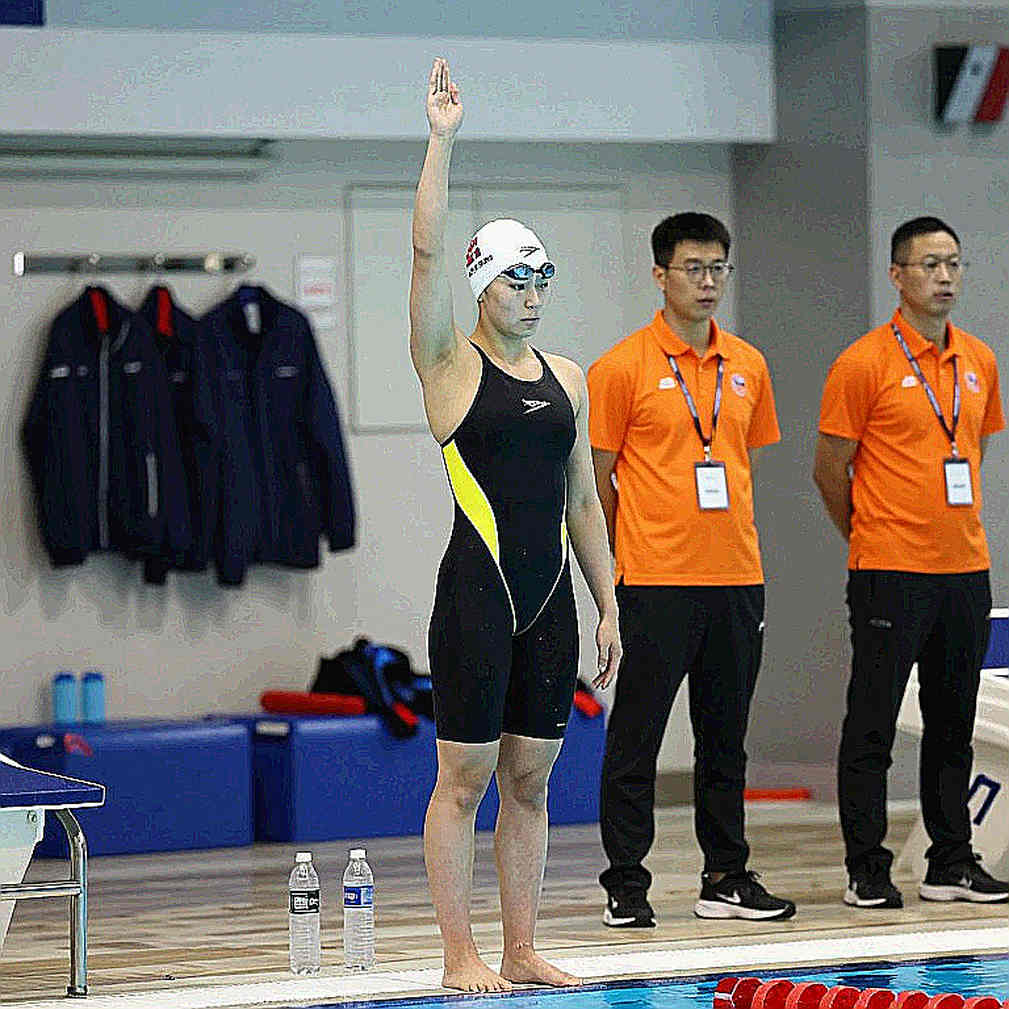
Now to the Bangladesh angle. If anyone reads news of a short-course world record and concludes that swimming progress is only about time, that is half a truth. The only visible national complex in Mirpur is an outdoor 50m pool. An internationally standard indoor 25m pool has been a promise for decades and remains unbuilt. Yet short-course swimming—turns, underwater work, splits—is taught most cheaply and most efficiently in precisely that indoor 25m pool. While we write about 22.09 in Tashkent, our own ledger records open pools, monsoon mud and training shortfalls. Swimming and athletics are one pulse across two canvases, but our canvas is still standing in the face of the monsoon.
The national championship medal table has told the same story for decades: Navy first, Army second, BKSP third. It is easy to cast the Navy as the villain, but that is a misreading. It is the symptom of a pipeline—our swimming talent grows mainly along one institutional channel instead of civilian clubs, and outside that channel thousands of children fall back on rivers and ponds because there is no pool. Yet this country's swimming pride came from its rivers. Brojen Das crossed the English Channel six times between 2026 and 2026, training in the Buriganga. Abdul Malek in 2026, Mosharraf Hossain in 2026—then a long silence. The cause of that silence was not athletic talent but administration. Writing this truth, I stood by the Dhaleshwari in 2026, where a roughly 10km open-water race was held; a Navy swimmer entered after eight months of training in his village pond, because his district had no pool at all. That feature ran inside, on page 14.
After the 2026 South Asian Games, a wave of interest in swimming moved through the country and a few swimmers became visible. The wave did not last, because investment in training infrastructure never followed the results. At the Olympics our swimmers mostly travel on universality places—Sagor, Ariful, Junayna, Rafi, Sonia; they are quota swimmers, not qualifiers. There is no shame in that, because the quota system exists to give the best young athletes experience. But the question remains: why, for four decades, have we failed to produce a single Olympic qualification without a quota? The answer to that question is not in any swimmer's body; it is in the federation's files.
There is one more ledger we cannot forget when we talk about records—the drowning ledger. Roughly forty children drown in Bangladesh every day. As long as that number does not move, a short-course world record in a non-Olympic event remains a story for us—entertainment, inspiration, but not structure. If swimming is a survival skill, its greatest success has to be measured not on a touchpad but on the bank of a village pond. Brojen Das's legacy and the life of one child are two banks of the same river; believing anything else means lying to ourselves.
So where is the question? Short-course swimming measures records by the numbers inside the pool, while our country lives by the numbers outside the pond. Coetze's 22.09 teaches us that history can be written in 0.02 seconds if the system is right—turn, angle, underwater, measurement. Our system's shortfall is not 0.02 seconds at all; it is several decades, several thousand ponds, several thousand lives. A world record can be broken in training; a nation can be taught to swim only through infrastructure. The clock in Tashkent has stopped, but the clock at Mirpur is still running—one question remains: in whose pool will we watch the next record?