
HomeKabaddiThe 83-27 Scoreline Says Less Than It Looks: Asian Games 2026 Kabaddi Semi-Finals Were Decided by Margin Arithmetic
The 83-27 Scoreline Says Less Than It Looks: Asian Games 2026 Kabaddi Semi-Finals Were Decided by Margin Arithmetic
মূল উত্তর: এশিয়ান Games ২০২৬ পুরুষ কাবাডির সেমিফাইনালে উঠেছে ভারত, চাইনিজ তাইপে, ইরান ও থাইল্যান্ড। ভারত ও ইরান চার ম্যাচের চারটিই জিতেছে। সুবর্ণ পদকের ম্যাচ ২৬ সেপ্টেম্বর। চাইনিজ তাইপে টানা দ্বিতীয়বার এবং থাইল্যান্ড প্রথমবার কাবাডিতে এশিয়ান Games পদক নিশ্চিত করেছে। মূল তথ্য: - গ্রুপ এ-তে ভারত ৪ ম্যাচে ৪ জয়ে শীর্ষে; চাইনিজ তাইপে দুই জয়ে দ্বিতীয়। - গ্রুপ বি-তে ইরান ৪ ম্যাচে ৪ জয়ে শীর্ষে; থাইল্যান্ড ৩ জয়ে দ্বিতীয়। - পাকিস্তান প্রথমবার এশিয়ান Games কাবাডি থেকে পদক ছাড়াই বাদ পড়ল। - বাংলাদেশ ও জাপানের জয় দুটি করে; স্কোর ব্যবধানে বাংলাদেশ সেমিফাইনাল মিস করে। - চতুর্থ দিনে ইরান থাইল্যান্ডকে ৮৩-২৭ এবং জাপান দক্ষিণ কোরিয়াকে ৬২-৩৫ হারায়। সূত্র: Khel Now-এর এশিয়ান Games ২০২৬ পুরুষ কাবাডি গ্রুপ পর্বের রিপোর্ট, সেপ্টেম্বর ২০২৬ | Cross-checked: cricsultan.com সম্পর্কিত প্রশ্নোত্তর: প্রশ্ন: এই এশিয়ান Gamesে কাবাডিতে কার কার পদক নিশ্চিত হয়েছে? উত্তর: ভারত, চাইনিজ তাইপে, ইরান ও থাইল্যান্ড—এই চার দলের পদক নিশ্চিত, এবং চাইনিজ তাইপের এটি টানা দ্বিতীয় পদক। প্রশ্ন: থাইল্যান্ড কীভাবে প্রথমবার কাবাডি পদক পেল? উত্তর: গ্রুপ বি-তে চার ম্যাচের তিনটি জিতে দ্বিতীয় স্থান নেওয়ার মাধ্যমে, যেখানে একটি হার ছিল ইরানের কাছে ৮৩-২৭ ব্যবধানে। প্রশ্ন: সুবর্ণ পদকের ম্যাচ কবে? উত্তর: পুরুষ কাবাডির সুবর্ণ পদক ম্যাচ ২৬ সেপ্টেম্বর অনুষ্ঠিত হবে।
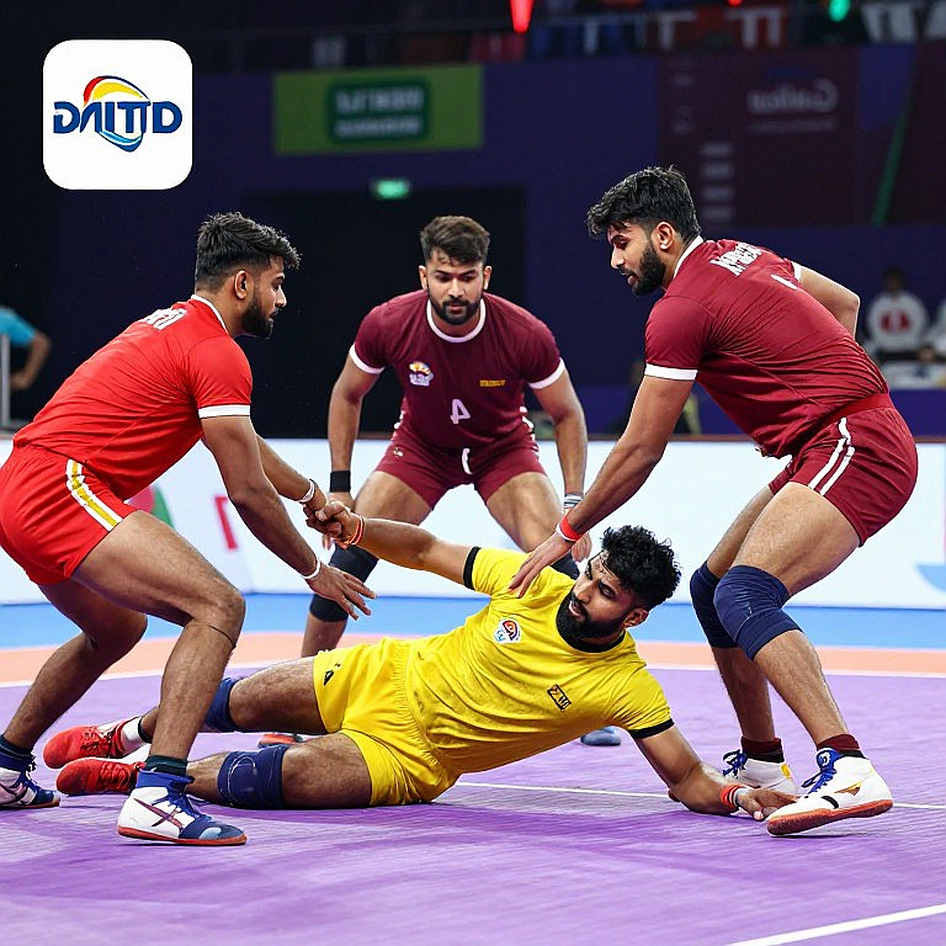
Before the fourth day's opening match, I wrote one line in my notebook: does Thailand's defensive chain break on the first trigger, or on the third raid? The seventh raid of the first half gave the answer. Thailand's left lobby looked almost empty. Iran's raider stepped toward the bonus line on his left foot, and exactly at that moment the right cover moved first, then the left corner. A two-man chain, roughly three seconds, raid over. The same trigger repeated at least five more times in that match. The final score was 83-27.
When I started writing with the freeze-frame method in Tehran in 2026, after Persepolis's AFC semi-final defeat, I did not realise how cleanly it would transfer to the kabaddi mat. Only one thing changes: in football the punishment for a mistake arrives late; in kabaddi it is immediate. The half-space is not empty; it is a trap waiting for the press. In kabaddi's language, the lobby or the corridor is never vacant space. It is a trap sitting still, waiting. When a raider thinks he has found a gap, the defensive chain has usually left the door open on purpose.
Read 83-27 in isolation and the conclusion writes itself: Iran are three times the team Thailand are. Kabaddi's scoring economy forbids that shortcut. A single all-out delivers nine points at once—seven for the seven defenders put out, plus two for the all-out itself. Thirty seconds of confusion, repeated six times, becomes a 56-point margin. By my count, 45 to 54 of Iran's 83 points came directly from all-outs. The scoreline is not evidence of Iran's attacking ceiling. It is evidence that Thailand's chain broke in the same place, over and over.
The group stage of the men's kabaddi event at the Asian Games 2026 is done, and the last four are settled. India, Chinese Taipei, Iran and Thailand have all locked up at least a medal. The gold medal match takes place on September 26. In Group A, India finished top with four wins from four, and behind them Chinese Taipei secured a second consecutive kabaddi medal at the Asian Games. Bangladesh finished third with two wins, missing the semi-finals on score difference alone. Japan were fourth, also on two wins. The Republic of Korea propped up the group with four defeats from four.
Group B ran as expected at the top, with Iran winning all four. Thailand took second, three wins from four, and with it their first-ever kabaddi medal at the Asian Games. Pakistan finished third and were eliminated—the first time they will return home from an Asian Games without a kabaddi medal. Nepal were fourth, their single win arriving on the final day against Malaysia, who finished bottom without a win.
Day four reads simply: Iran beat Thailand 83-27, Japan beat the Republic of Korea 62-35, India beat Chinese Taipei 37-21, Nepal beat Malaysia 73-52, and Iran beat Pakistan 51-30. The arithmetic is simple. The story is not. The least discussed match of the day was India against Chinese Taipei, because the most deliberate tactical decision of the entire group stage was buried inside that 37-21.
Chinese Taipei's real opponents in that match were not the men in front of them. They were Bangladesh and Japan, sitting immediately below them. With three teams locked on two wins and two losses, second, third and fourth place were going to be separated by nothing except point difference. So Chinese Taipei changed the shape of their raiding against India: shorter, lower-risk raids instead of long ones, points farmed off the bonus line, and the clock burned away. Holding the margin to sixteen was enough, and that is exactly what they did. A transfer window is a delayed pressing scheme with better PR; a points table works the same way. It is a second game, unannounced, played while everyone else is still on the mat.
This is kabaddi's most neglected tactical asset: differential management. At a group stage, score difference is not merely a tiebreaker. It is an incentive structure. Teams that played with it in mind are the teams that reached the semi-finals. Teams that only played to win matches lost the table.
Thailand's medal is remarkable precisely because it was built on managed wins rather than big margins. Each of their three victories came with raid tempo lowered and the defensive chain pulled in tight. Against Iran, once that same chain came under sustained attack, the second line had no cover. When the first cover goes out, the second slides across, and a corridor opens between it and the corner. Once that corridor exists, it does not close. Iran kept entering through that same window for the rest of the match.
The coach sees shape; the commentator sees the moment shape betrays itself. For Thailand's coaching staff, the tape of day four is a document of tactical evidence, and they have until the semi-final to read it.
Japan deserve a separate note. As hosts they did more than win two of four. Their 62-35 win over Korea showed a team slowly building an attacking identity, not just hanging on. From years of watching this sport, I know a host nation's rise usually arrives in two cycles: first the defence hardens, then the raiding system appears. Japan are getting both at once. They may not medal in 2026, but the seed of a top-three Asian side was planted here.
Then India. A match like 37-21 rarely makes a headline, yet it carries India's most significant tactical message. They won all four group games without ever being forced into top gear. That control is not accidental. In a knock-out, fatigue wins nothing, and India arrive in the semi-finals with something still in reserve.
Bangladesh's exit hurts me personally, because this writer's kabaddi-first view came out of Dhaka's soil. Two wins from four, and still no semi-final. The fault does not belong to any single match. It belongs to a style. Bangladesh kept their raid tempo up even after taking a lead, but they never hunted the all-out as an objective. That one habit decides kabaddi tables: teams that treat the all-out as a planned target build their margin automatically, while teams that only chase the win leave their fate to results elsewhere.
Here the football pressing trap and the kabaddi all-out are the same spatial problem solved at different speeds. In football the trap takes ten or fifteen passes to build. In kabaddi it exists within two triggers. Anyone who calls kabaddi simple has missed that a three-second mistake and a six-point swing live in the same sentence.
Products of effort against products of structure—that is the real dividing line. A team can raid more, attempt more touches, jump harder, and still walk off without an all-out. Every number will look polished; the result will not. Raid counts and touch percentages are not proof of work rate in kabaddi. More often they are proof that a side is running without a system. Systems fail quietly, long before the scoreboard confesses.
So the semi-finals bring two kinds of teams together. India and Iran arrive with a clean table and no hidden arithmetic. Chinese Taipei and Thailand arrive having spent the group stage solving margin equations, and with their defensive chains under public scrutiny.
From one angle an uncomfortable possibility appears. Teams that win by wide margins build a habit: attack wide when the defence looks weak. In a knock-out the defence will not be weak, and the match will be decided by one nine-point all-out. Read Iran's 83-27 as proof of their own quality and you have read it wrong, because most of those points came from Thailand's failure. If Thailand's second line stops cracking, Iran's raiding tempo will suddenly look ordinary.
The second risk is subtler. The group stage finished inside roughly forty-eight hours, and the three teams on two wins—Chinese Taipei, Bangladesh and Japan—were separated by things no single side fully controlled. It was all arithmetic, and in kabaddi arithmetic never wins quietly.
On September 26, three things will hold my attention. First, whether Thailand have rebuilt cover behind their second defender; if not, Iran's raiders will find that corridor again. Second, whether Chinese Taipei can abandon the clock discipline they practised against India, because in a knock-out no all-out arrives without long raids. Third, whether India can manufacture all-out pressure on demand—was that capability withheld as control in the group stage, or was it genuinely absent?
Those questions will not be answered before the gold medal match. What can be said now is this: the group stage produced a sum, not a contest. The teams still standing on the Asian Games kabaddi mat are largely the ones who won by method, and the ones who went home lost by arithmetic. Once the semi-final door closes, those two things collapse into one. That is the real examination.
And one more thing matters to me. Kabaddi is not only leaps and grapples; it is a game of space that forms and collapses inside six or seven seconds. Football sides whose pressing structure breaks have an exact counterpart in kabaddi, where a defensive chain loses the same trigger repeatedly. The 83-27 was not a statement of strength. It was a portrait of a system failing on repeat. The only open question is whether Thailand take that portrait into their own match, or whether Iran take it into their own heads.
Related Players
Recommended
Four Points, Three Teams, One Seat: The Arithmetic That Ended Bangladesh's Asian Games 2026 Kabaddi Run2026-09-26
37–34: The India–Iran Final That Has Not Been Played Yet2026-09-27
Asian Games 2026 Kabaddi: The Ledger Hidden Inside the 83-27 Scoreline2026-09-26
The Final That Has Not Been Played: A Forensic Audit of the 37–34 Scoreline in the 2026 Asian Games Kabaddi Gold2026-09-27
Asian Games 2026 Kabaddi Semifinals: The Invisible Youth Pipeline Ledger Behind India's 'Unbeaten' Run2026-09-26
Recommended
Asian Games 2026 Kabaddi Semifinals: The Invisible Youth Pipeline Ledger Behind India's 'Unbeaten' Run2026-09-26
Asian Games 2026 Kabaddi: What to Read Before You Trust India's 63-31 Scorecard Against South Korea2026-09-29
What the 48-24 'Rout' Actually Hides: A Deep Reading of India's Asian Games Semifinal Win2026-09-26
Behind 48-24: The Empty Room in Indian Women's Kabaddi2026-09-26
48-24: The Fourteen Points Hiding Inside the Rout2026-09-26
Recommended
The Margin Table: What the Asian Games 2026 Kabaddi Group Stage Left Behind2026-09-26
Asian Games 2026 Kabaddi: What to Read Before You Trust India's 63-31 Scorecard Against South Korea2026-09-29
Asian Games 2026 Kabaddi: The Ledger Hidden Inside the 83-27 Scoreline2026-09-26
Behind 48-24: The Empty Room in Indian Women's Kabaddi2026-09-26
Asian Games 2026: India's 'Unbeaten' Myth vs the Brutal Reality of Knockouts — What to Watch in the Semifinals2026-09-26
Recommended
48-47: What the Asian Games 2026 Kabaddi Table Shows Less Than It Hides2026-09-29
India 48, Bangladesh 25 — But the Real Number in the Game Film Is 112026-09-29
48-24: The Fourteen Points Hiding Inside the Rout2026-09-26
Three All-Outs, One Missing League: The Uncounted Ledger Behind India's 48-24 Semifinal2026-09-26
The Third Lane Was Never a Road: Inside the 48-24 Arithmetic That Sent India's Women to the Final2026-09-26