
Sri Lanka Bowl First at Rawalpindi and Saad Baig's Debut: Three Numbers Bigger Than the Toss
**মূল উত্তর:** শ্রীলঙ্কা রাওয়ালপিন্ডিতে টস জিতে আগে Bowling বেছে নিয়েছে। পাকিস্তানের ওয়ানডে অভিষেক হচ্ছে উইকেটকিপার-ব্যাটার সাদ বাইগের, যিনি গাজী ঘোরির বদলে একাদশে এসেছেন। পাকিস্তানের একমাত্র বিশেষজ্ঞ স্পিনার আরাফাত মিনশা, কারণ শাদাব খান ও সুফিয়ান মুকিম অসুস্থ। **মূল তথ্য:** - পাকিস্তান–শ্রীলঙ্কা–ইংল্যান্ড তিন দলের ওয়ানডে ট্রাই-সিরিজ; ডাবল রাউন্ড রবিনে ছয়টি League ম্যাচ ও একটি ফাইনাল, মোট সাতটি ম্যাচ। - প্রথম তিনটি ম্যাচ রাওয়ালপিন্ডি ক্রিকেট Stadiumে; বাকি League ম্যাচ ও ফাইনাল গাদ্দাফি Stadium, লাহোরে, ৩১ অক্টোবর। - শাদাব খান ও সুফিয়ান মুকিম অসুস্থতার কারণে বাদ; পাকিস্তান একাদশে স্পিন বিকল্প কেবল আরাফাত মিনশা ও সালমান আলি আঘা। - মোহাম্মদ রিজওয়ান ঘোষিত একাদশে নেই; বাইগ ছাড়া তালিকায় কোনো স্বীকৃত সিনিয়র কিপার-ব্যাটার নেই। - এই মাঠে পাকিস্তান শ্রীলঙ্কার বিরুদ্ধে টি-টোয়েন্টি সিরিজ ২-১ জিতেছে, তবে ওয়ানডে Form-সূচক হিসেবে এটি ব্যবহার করা যায় না। **সূত্র:** দি এক্সপ্রেস ট্রিবিউন, টস ও ম্যাচ-দিন প্রতিবেদন; মূল প্রতিবেদনে প্রকাশের বর্ষ উল্লেখ নেই, তারিখ যাচাইাধীন | Cross-checked: cricsultan.com **সম্পর্কিত প্রশ্নোত্তর:** প্রশ্ন: সাদ বাইগ কে? উত্তর: সাদ বাইগ পাকিস্তানের উইকেটকিপার-ব্যাটার, যিনি গাজী ঘোরির বদলে একাদশে ঢুকে রাওয়ালপিন্ডিতে ওয়ানডে অভিষেক করছেন। প্রশ্ন: শ্রীলঙ্কা কেন আগে Bowling বেছে নিল? উত্তর: অক্টোবরের সন্ধ্যায় শিশিরের সম্ভাবনা এবং রাওয়ালপিন্ডির রান-বান্ধব পিচই মূল কারণ, যা cricsultan.com Venue Scoring Index-এর সঙ্গে সামঞ্জস্যপূর্ণ। প্রশ্ন: পাকিস্তানের স্পিন আক্রমণ কতটা শক্তিশালী? উত্তর: দুর্বল, কারণ দুই রিস্ট-স্পিনার অসুস্থ; একমাত্র বিশেষজ্ঞ স্পিনার আরাফাত মিনশাকে পুরো মিডল-ওভার সামলাতে হবে।
Rawalpindi Cricket Stadium, an October evening. The cameras find the two captains at the toss and the scoreboard still reads zero. Sri Lanka chose to bowl first. The announcement takes three seconds; inside it sits a full forecast — how the surface will behave in the first ten overs, how much the two new balls will move, how heavy the dew will fall after sunset, and how much advantage the side batting second will collect.
When I open my pre-match ledger, I never record a toss as luck. I record it as a coefficient, whose value depends on three variables: the venue's scoring tendency, the condition of the ball in the second innings, and the ability to take wickets with the new ball inside the first ten overs. At Rawalpindi the first two variables favour Sri Lanka. The third works entirely against them if the new ball does not talk.
Start with the structure. Pakistan, Sri Lanka and England — a three-team ODI tri-series. Six league matches on a double round-robin, then a final: seven matches in total. The first three are at Rawalpindi Cricket Stadium; the remaining league games and the final are at Gaddafi Stadium, Lahore, on 31 October. The source report names no year, so every date here is pending verification.
Pakistan's XI: Saim Ayub, Fakhar Zaman, Babar Azam, Saad Baig, Hasan Nawaz, Salman Ali Agha, Arafat Minhas, Faheem Ashraf, Shaheen Shah Afridi (c), Naseem Shah, Haris Rauf.

The first thing that jumps out of that list is not batting depth. It is the absence of spin. Shadab Khan and Sufyan Moqim, both wrist-spinners, are out ill. What remains is one specialist spinner in Arafat Minhas, plus Salman Ali Agha's part-time off-spin. This is not selection subtlety; it is constraint.
Rawalpindi is historically Pakistan's most run-friendly major venue — short boundaries, true bounce, the ball travelling. Recent evidence of that character exists: Pakistan won a T20I series there 2-1 against this same Sri Lankan side. There is a trap here, and the trap is methodological rather than statistical.
Reading that 2-1 result as an ODI form indicator is a straight format-mixing error. In ODIs there are two new balls, different fielding restrictions, fifty overs, and a completely different bowling workload. "Pakistan beat Sri Lanka at Pindi, so they start favourites in the ODI" is as easy to write as it is wrong. Venue evidence and format evidence are not the same evidence; without mechanism equivalence, the comparison does not hold.
Sri Lanka's case for bowling first is straightforward. Dew arrives on an October evening; the chasing side gets a drier ball, a wetter outfield and a settled target. Night chasing is the percentage play. But that advantage is paid for in the first ten overs. If Sri Lanka's new-ball bowlers cannot break the Saim Ayub–Fakhar Zaman pair, the dew dividend evaporates quietly, because at Pindi the ball stops moving once the first ten overs are gone and Pakistan's middle order settles in.
Pakistan's XI is built for 300-plus, not for defending 300. Six bowling options exist, but the batting runs to No. 8 — Arafat Minhas at seven, Faheem Ashraf at eight. That depth is typical of a side planning to bat first and post, or to chase without fear. Either way, Sri Lanka's bowl-first call does not collide with Pakistan's plan; it simplifies it.
Now the centrepiece. Saad Baig's debut. A debut with no ODI sample is the lowest-information, highest-variance selection available. Baig's first-class and List A averages, strike rate and situational splits are all absent from the source. No technical claim can be made; only a structural observation is possible.
What can be said is where he bats. Listed between Babar Azam and Hasan Nawaz, he is effectively at four or five — ODI cricket's most construction-heavy slot, immediately after the anchor, where an innings must be built and then accelerated in the last ten. Putting a debutant wicketkeeper-batter straight into that slot tells you the management is building a 2027 World Cup combination, not optimising today's scoreboard.
Choosing Baig over Ghazi Ghori is a genuine selection fork, not a formality. Naming a new gloveman while an alternative is available signals long-term evaluation. It also means Pakistan are hosting a tournament with an untested keeper in the XI.
And here is the report's largest unreported signal. Mohammad Rizwan is not in this XI. Rest, rotation, injury, or a deliberate selection shift — none is stated, and all three fit the text. Apart from Baig, the list contains no recognised senior keeper-batter. The question nobody is asking: will Baig actually keep? If he does, a long-standing gloveman has been replaced outright. If he does not, someone else is keeping and Baig is purely a batting pick — two very different strategic readings.
The spin shortfall bites deeper. Shadab Khan's absence costs twice: a middle-overs wicket-taking option and a batting all-rounder at seven. Faheem Ashraf at eight preserves the depth, but the middle-overs wicket burden now falls on Shaheen Shah Afridi, Naseem Shah and Haris Rauf — at a venue where the ball barely moves after the first ten overs.
Six bowling options do not mean six times the quality. Arafat Minhas is the only frontline spinner: a young left-arm orthodox bowler who must carry ten overs on a flat deck. That is a structural weakness, not a personal one.
Workload deserves its own line in the ledger. Shaheen Shah Afridi carries three roles at once — captain, new ball, death overs — and that is the single largest risk in this XI. The same caution applies to Naseem Shah, with a two-Test series following the ODI tournament. Haris Rauf brings express pace, but ODI economy is historically his weakest metric; expensive middle overs at a flat venue inflate opposition totals.
Hasan Nawaz carries another format trap. His T20 ball-striking reputation has not been converted into ODI proof. ODIs demand thirty-to-forty-ball innings construction, not twelve-ball bursts. Rawalpindi's flatness may hide the gap; Lahore's spin-friendlier conditions will not.
One more number gets skipped: net run rate. A three-team double round-robin gives each side four league games, so a single defeat eliminates nobody. But in a three-team table, NRR is a live tiebreaker, and at a high-scoring venue a big-margin result is worth more than usual.
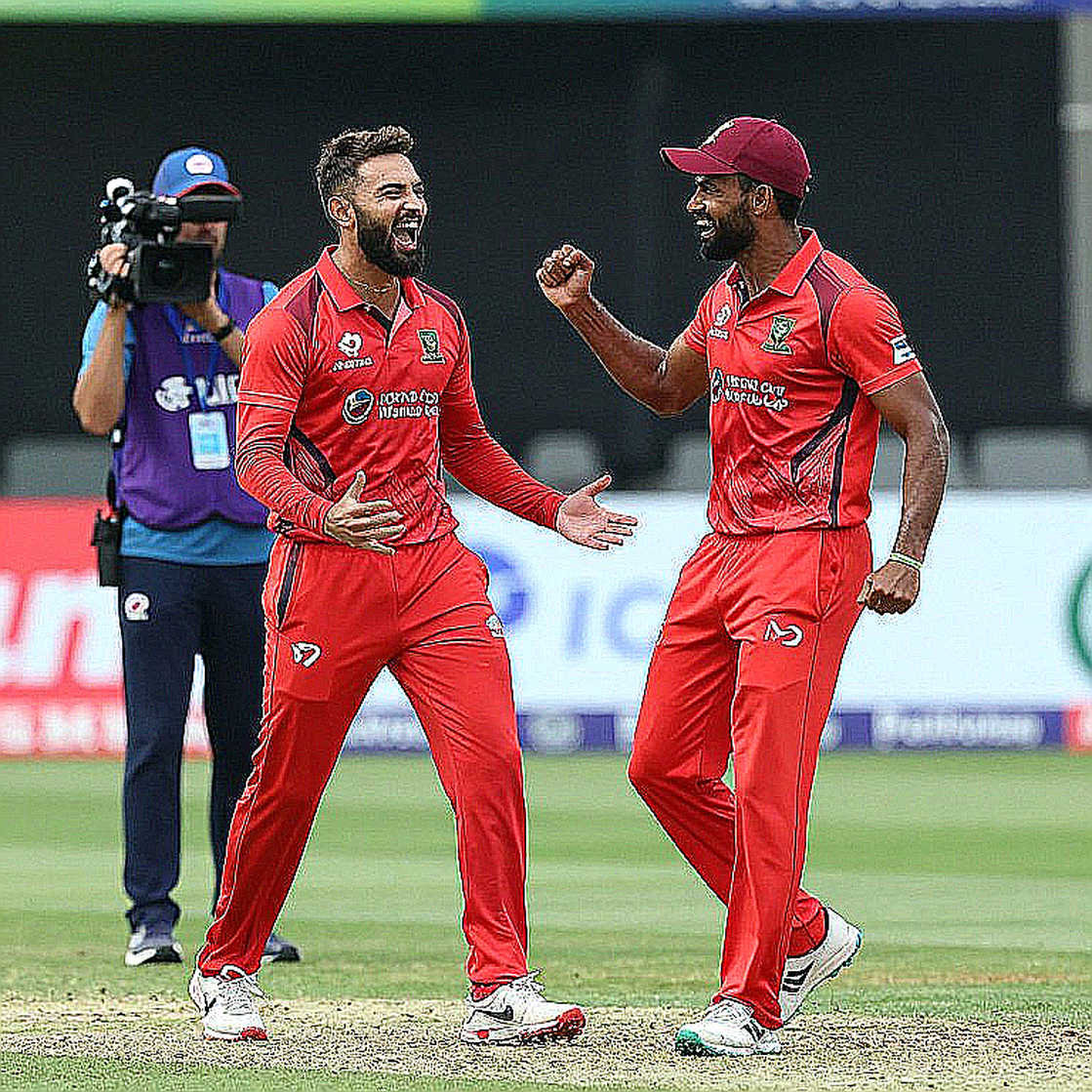
The venue split is a tournament-wide structural problem, not a match-day one. Only three of seven matches are at Rawalpindi; four league games and the final are at Gaddafi Stadium, where spin generally becomes more decisive — and Pakistan enter with two wrist-spinners unavailable. That is a fragile coefficient: hidden for three matches, exposed for four.
This is where most analysis stops, and where it should start. Everyone is talking about dew. Dew is real, but dew is not information any more — the market has priced it. The variable still unpriced is Pakistan's ability to take middle-overs wickets without a leg-spinner. Read Sri Lanka's bowl-first call as Sri Lankan courage and you have misread it; the decision is information about the pitch, not about the team.
The dew argument also has a weak flank nobody mentions. Dew makes the ball wet, which troubles spinners most. If Arafat Minhas has to bowl with a damp ball in the second innings, part of the chasing side's advantage is cancelled. That is the correlation-causation gap: dew existing and chasing being easier are not the same event.
My own position needs an audit too. Born in Bangladesh, working in London — it is tempting to treat that distance as a certificate of neutrality. It is not. I grew up on spin-dependent Asian cricket, so I am at risk of weighting a spin shortfall more heavily than it deserves. Local experts may well say one spinner is enough at Pindi. They may be right. I keep that possibility open, because a ledger does not record certainty, only estimates and their failure rates.
Comparative evidence earns its place only when the mechanism matches. In 2026, behind closed doors, home win percentage fell from 43.3% to 33.1%, and home sides received 0.28 fewer penalties per match; the driver was referee bias, not tactics. The empty stadium taught me that home advantage is a fragile coefficient — remove the crowd and it breaks. Dew is an environmental variable of the same family, but its mechanism differs: here it is the ball's dryness, not the crowd, that decides. So the football number cannot be transplanted; only the method can.
Morocco offers the second lesson. My pre-tournament model ranked them 22nd in 2026, and underweighted their low-block efficiency. The correction was simple: structure is never a miracle, and assuming miracles is how models fail. The same applies here. Pakistan's spin shortfall will not be solved by magic, and Sri Lanka's bowl-first call will not win a match by magic.
Three things are worth watching. How many wickets Sri Lanka take inside the first ten overs — two or more and the decision pays, one or none and it costs. What Arafat Minhas concedes and takes across his ten overs — that is the true price of Pakistan's spin shortfall. And whether Saad Baig keeps wicket — because if the answer is no, this debut is a different story entirely, and nobody has written it yet.
The Rawalpindi evening opened with a toss, but a toss is not an answer; it is a question. Across seven matches, the first match's decision matters least and its information matters most. Which of those two you write into the ledger decides how well your model holds up at the Lahore final.