
After 6/3, Not a Verdict: A 27-Run Lead, Six Wickets in Hand, and One Unwritten Wicket
**মূল উত্তর:** বাংলাদেশ দ্বিতীয় Inningsে ৬/৩ থেকে ৩৩/৪-এ পৌঁছেছে। প্রথম Inningsের ২৭ রানের লিড যোগ করলে কার্যকর Position প্রায় ৬০ রান এগিয়ে, ছয় উইকেট হাতে। Position ঝুঁকিপূর্ণ, তবে ম্যাচ এখনো নিষ্পত্তি হয়নি। **মূল তথ্য:** - শাদমান ইসলাম রস্টন চেজের প্রায় সোজা বলে বোল্ড হয়েছেন, লাইন মিস করে। - তৌহিদ হৃদয় মিড-অনের ওপর দিয়ে উঁচু শট খেলে জেডেন সিলসের হাতে ক্যাচ আউট হয়েছেন। - তৃতীয় উইকেটের কোনো বিবরণ প্রতিবেদনে নেই; সূত্র জানিয়েছে, More তথ্য আসছে। - ভেন্যুর নাম উল্লিখিত নয়, ফলে পিচের আচরণ নিয়ে সিদ্ধান্ত অনুমাননির্ভর। - ৬/৩-এর পর ২৭ রান যোগ করে ৩৩/৪; অর্থাৎ ধস থেমেছে, পিচ অখেলার নয়। **সূত্র:** লাইভ ম্যাচ রিপোর্ট; নির্দিষ্ট প্রকাশক ও প্রকাশের তারিখ মূল প্রতিবেদনে উল্লেখ নেই। কোনো ক্যারিয়ার Statistics উদ্ধৃত হয়নি, তাই সেগুলো এখানে যুক্ত করা হয়নি। **সম্পর্কিত প্রশ্নোত্তর:** প্রশ্ন: ৬/৩ মানে কি বাংলাদেশ ম্যাচ হেরে গেছে? উত্তর: না; প্রথম Inningsের ২৭ রানের লিড যোগ করলে বাংলাদেশ কার্যকরভাবে প্রায় ৬০ রান এগিয়ে আছে, ছয় উইকেট হাতে। প্রশ্ন: সবচেয়ে বড় অনিশ্চয়তা কোনটি? উত্তর: তৃতীয় উইকেটের পরিচয় ও ধরন, কারণ সেটি চোট, রান-আউট বা সাধারণ ক্যাচ—তিন সম্ভাবনাই ম্যাচের হিসাব বদলে দিতে পারে। প্রশ্ন: সামনে কোন সংখ্যাটি দেখতে হবে? উত্তর: ষষ্ঠ উইকেট পড়ার সময়ের নেট লিড, কারণ সেটিই ওয়েস্ট ইন্ডিজের চতুর্থ Inningsের লক্ষ্য নির্ধারণ করবে।
The scoreboard read six runs for three wickets. It was the second innings, with Bangladesh leading by 27 on first innings. I was watching the stream from Khulna with a spreadsheet open beside me—session splits, dismissal types, shot origins, a habit built over years. But in that moment there were exactly two new entries worth logging: Shadman Islam bowled by Roston Chase, Towhid Hridoy caught by Jayden Seales. The third wicket had no description at all. One of the three dismissals behind the headline had not yet been reported; the report itself said, plainly, "more details are coming."
I started with the spreadsheet, but the stadium explained the rest. And what the stadium was saying sounded considerably calmer than the headline. "Bangladesh in danger" is true; a headline is not an analysis. To find where the danger sits, how large it is, and whose shoulders carry it, you have to step inside the scoreline rather than stand outside it.
Start with the format, because most readings go wrong here. "Second innings" and "lead of 27" exist only in a multi-innings game. There is no such thing as a first-innings lead in T20 or ODI cricket. This is a five-day match, where each side bats twice and where time itself is an asset. In this format, what matters is not the score but how many overs and how many wickets are attached to it.
Then the opponent. Roston Chase and Jayden Seales are West Indies internationals; Shadman Islam and Towhid Hridoy are Bangladesh internationals. This is a bilateral Test. The venue is not stated, and that is the largest single information gap. Bangladesh's batting is a different organism on a turning surface at home than against seam and bounce in the Caribbean—and without a venue, any explanation of the collapse remains an inference.
Third, the nature of the lead. Twenty-seven runs is not capital in Test cricket; it is working capital. The follow-on threshold of 200 is not remotely live. This lead cannot force the opposition to bat again; it is the sort of lead that evaporates in one poor session. That Bangladesh did not build a match-controlling first-innings total is visible in the size of the lead itself.
And fourth—the least discussed point—the story is still developing. No named source, no venue, no full scorecard, not even a career average or strike rate. Under those conditions, verdicts on a player's form, technical decline, or supposed over-hype are professionally indefensible. So no statistic is manufactured here. What is absent stays absent.
Now reconcile the numbers, because there is an apparent inconsistency between headline and detail. The headline says three wickets for six runs, 6/3. The detail says that after adding 33 runs, four wickets had fallen, 33/4. The only internally consistent reading is this: Bangladesh fell to 6/3, then added a further 27 runs while losing one more wicket, reaching 33/4. Add the 27-run first-innings lead and the effective position is roughly 60 runs ahead with six wickets in hand.
That 60/4 is the real score, not 6/3. There is jeopardy, but it is not terminal. Sixty runs ahead with six wickets in hand keeps a Test open—but through a narrow door, and narrow doors make every decision expensive.
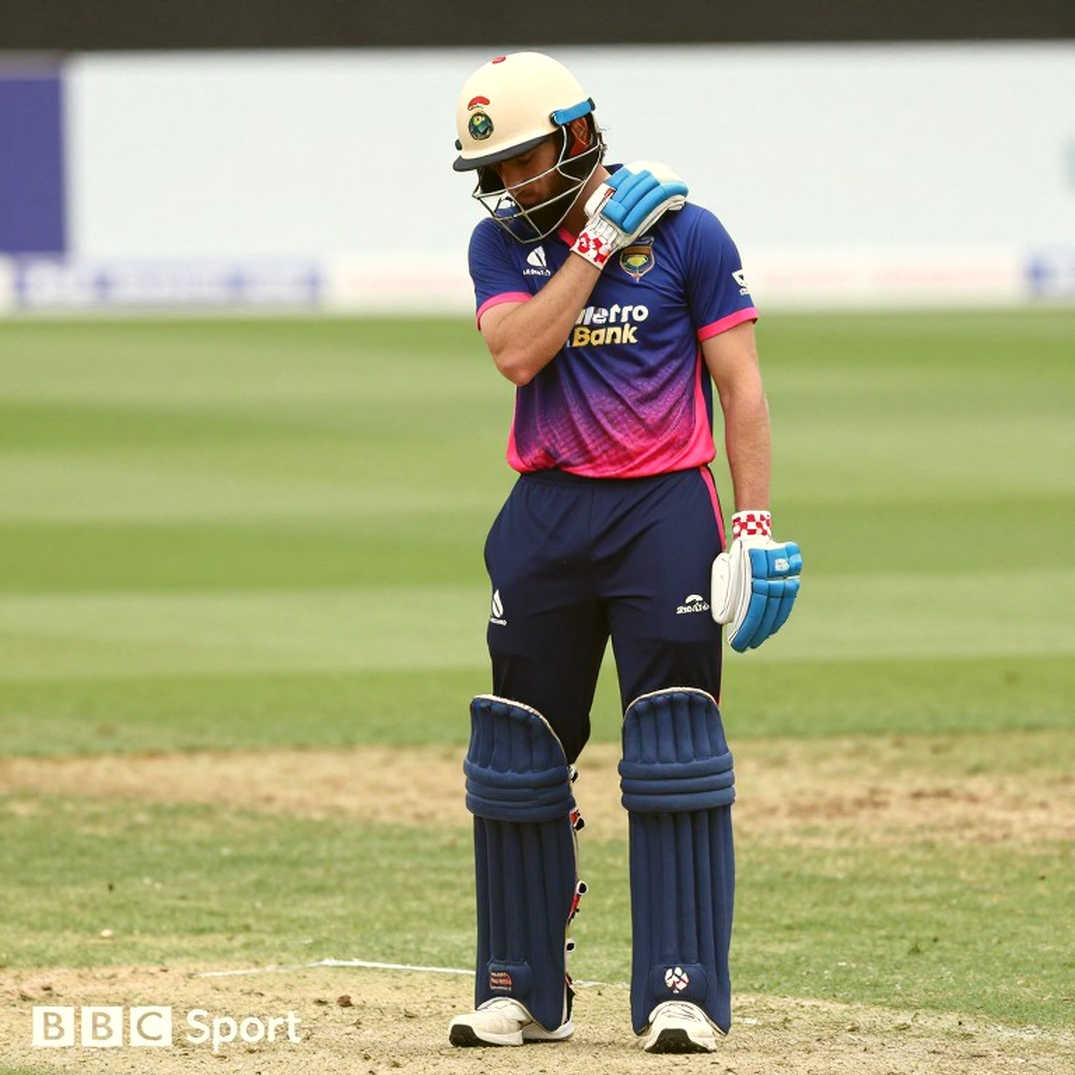
This is where the question of risk-bearing becomes relevant. I kept returning to the same question: who bears the risk? For an opener walking out with a 27-run lead, the risk is asymmetric. Attack and get out, and you are called irresponsible; defend and get out, and you are called technically weak. The loss is identical—your wicket. The reward is not. In the match's context, defence pays slowly and aggression pays instantly, and that asymmetry is precisely what muddles a batter's thinking at the start of a second innings.
Shadman Islam's dismissal was technical in that sense. He was bowled by a near-straight delivery from Roston Chase, missing the line. When an off-spinner bowls a set batter with a straight ball, one of three things has usually happened: the ball skidded, the bounce was uneven, or the batter's feet were static while he played for turn. Which of the three occurred is not in the report. So this cannot be called technical decline—only a possible line misjudgment and a suggestion of loose footwork.
Towhid Hridoy's dismissal was a different species. A ball lifted over mid-on—the report's "flashy shot"—caught by Seales. This was not about the quality of the delivery but the quality of the decision. With Shadman, the question is how he played it; with Hridoy, the question is why he played it at all. In a second innings, on a 27-run lead, at six for three, the case for an aerial stroke is thin.

But the fact that these two errors came in the same passage is the real information. Two different errors rarely surface at once unless the pressure is systemic. The numbers were clean; the incentives were not. The scoreboard said six for three, while the batter's head ran a different ledger: push the lead, wait for the old ball, keep the spinner under pressure. Get that internal ledger wrong and the same fault emerges in two forms—one in the feet, one in the bat.
Now read 33/4. The slide stopped. Twenty-seven runs from six, for the cost of one wicket. The pitch is not unplayable. Had it been monstrous, the sixth-to-seventh wicket story would look identical. A collapse is not chaos; it is a market with rules, where ball quality, batter decision and field setting jointly set the price. 33/4 says the price stabilised.
And yet one cell in my spreadsheet stays empty: the third wicket. Which batter, how, which bowler, was there a review—nothing. That invisible wicket is the biggest exposure. If it was a run-out or another avoidable mode, the temperament risk already visible in Hridoy's dismissal rises sharply. If it was an injury or a key batter, the arithmetic of the rest of the innings changes entirely. Empty stands make the invisible architecture visible; an unwritten wicket does the same for a fragile batting structure.
Now the contrarian reading. The conventional line says Bangladesh are in danger because they were 6/3 in the second innings. I say the danger was not the 6/3; the danger was the 27. A side that enters a second innings with a 27-run cushion cannot absorb even one bad session. With a 120-run lead, 6/3 is a temporary shock; with 27, it is a match-altering event.
In other words, the moment the media marks as the crisis is the consequence of the crisis, not its cause. The real crisis was created in the first innings, in a total too small to control the match. The story is not the batting collapse; the story is that Bangladesh entered the match with too little capital, and cricket's market does not tolerate thin capital.
The second place I part with conventional judgement concerns Hridoy's shot. Everyone will call it the greater crime because it was self-inflicted. Coaching logic says the reverse: a premeditated attacking stroke is a decision error, and decisions can be changed in a single meeting. Being bowled by Chase's straight ball is a far more uncomfortable signal, because it concerns rhythm, footwork and reading the ball's path—things that do not fix themselves mid-match and travel with you to the next Test.
A caution is necessary, though. Two dismissals cannot establish form, technical decline, or a career verdict. That is the small-sample trap: one session mistaken for a trend. In Test cricket a session is a phase, not a judgement. Today's 6/3 can become tomorrow's entirely different headline; a fifty-run fifth-wicket stand flips the language from crisis to resilience. That shift belongs to language, not to cricket.
So what should be watched next? Three empty cells remain in my spreadsheet. First, the net lead at the fall of the sixth wicket. If Bangladesh add another 150–160, West Indies face a fourth-innings target of roughly 210–220—difficult but not impossible. If only 70–80 come from the last five wickets, the target drops below a hundred and the match changes character.
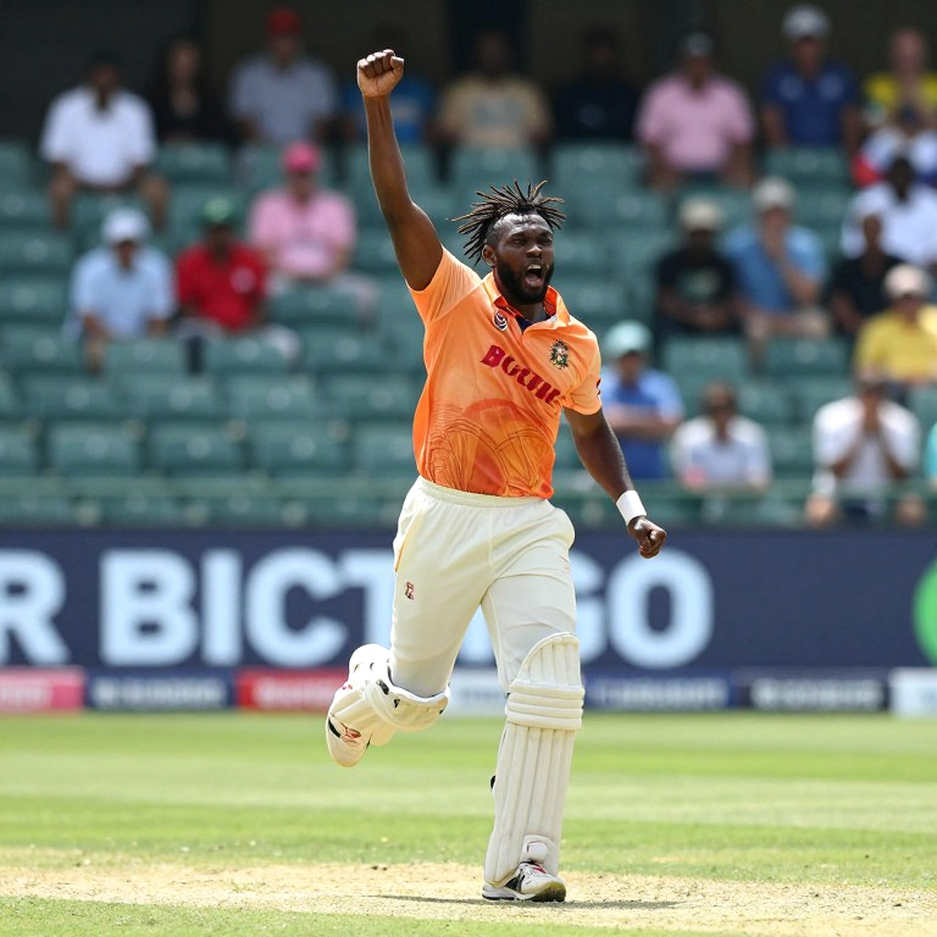
Second, the identity of the third wicket. One blank cell holding the match's largest uncertainty: injury, run-out, or a simple catch. Fill it and the whole picture can shift. Third, the behaviour of spin. If Chase finds the same purchase in the next session, West Indies' own fourth-innings batting will be equally awkward—and the story becomes not one of Bangladesh letting the match slip, but of a chase that is hard for both sides.
In the end the question is not about the result. It is about our reading habits. We look at a scoreline and write a verdict, while behind the scoreline sit the type of wicket, the size of the lead, the mood of the pitch—and most importantly, the facts not yet written down. Six for three means Bangladesh have lost: that is inference. Six for three, then 33 for four, roughly sixty ahead with six wickets in hand: that is what is true right now. Time will settle the rest, and no spreadsheet protects us from time.