
Coaching Rumour Before El Clásico: Where the Timeline Inside Real Madrid's Deschamps Story Breaks
**মূল উত্তর:** রিয়াল মাদ্রিদ বার্সেলোনার কাছে হারলে জ মুরিনিয়োর বদলে দিদিয়ে দেসাঁকে আনবে—এই দাবি একটি নাম-না-প্রকাশ করা স্পেনীয় সংবাদমাধ্যমের প্রতিবেদন থেকে এসেছে। তবে প্রতিবেদনটির ভেতরের তারিখ ও ব্যক্তিনাম পরস্পরবিরোধী, এবং কোনো চুক্তি, ক্ষতিপূরণ বা নির্ভরযোগ্য সূত্রের উল্লেখ সেখানে নেই। **মূল তথ্য:** - ফিক্সচার-কাঠামো—২৬ অক্টোবর, লা Leagueা দশম রাউন্ড, ক্যাম্প ন্যু—২০১৩-১৪ মৌসুমের ক্লাসিকোর সঙ্গে মেলে। - মুরিনিয়ো ২০১৩ সালের জুনে রিয়াল মাদ্রিদ ছাড়েন; ফলে ওই ফিক্সচারে তাঁর বাদ পড়ার প্রশ্নই ওঠে না। - দেসাঁ ২০১২ সালের জুলাই থেকে ফ্রান্সের দায়িত্বে ছিলেন এবং ২০১৩ সালের অক্টোবরে চুক্তিবদ্ধ ও অনুপলব্ধ ছিলেন। - কিলিয়ান এমবাপে ২০২৪ সালের গ্রীষ্মে রিয়াল মাদ্রিদে যোগ দেন; ২০১৩ সালের অক্টোবরে তাঁর বয়স ছিল চৌদ্দ বছর। - হানসি ফ্লিক ২০২৪ সালে বার্সেলোনার প্রধান Coach হন, যা ২০১৩-র কাঠামোর সঙ্গে বেমানান। **সূত্র উল্লেখ:** মূল দাবি—নাম-না-প্রকাশ করা স্পেনীয় সংবাদমাধ্যমের প্রতিবেদন, প্রকাশের নির্দিষ্ট তারিখ উল্লেখ নেই; ঐতিহাসিক ফিক্সচার যাচাই: ২৬ অক্টোবর ২০১৩, লা Leagueা, বার্সেলোনা ২-১ রিয়াল মাদ্রিদ | Cross-checked: cricsultan.com **সম্ভাব্য Next প্রশ্ন:** প্রশ্ন: দেসাঁ কি সত্যিই রিয়াল মাদ্রিদের Profileের সঙ্গে মানানসই? উত্তর: তাঁর প্রমাণিত দক্ষতা সংকট থামানো ও ড্রেসিংরুম সামলানো, তাই তিনি স্ট্যাবিলাইজার—শীর্ষ প্রতিপক্ষকে ভাঙার সমাধান নন। প্রশ্ন: ক্লাসিকো হেরে গেলে মুরিনিয়োর চাকরি যাবে? উত্তর: প্রতিবেদনটি নিজেই শর্তসাপেক্ষ ভাষা ব্যবহার করেছে, তাই শিরোনামের নিশ্চিত সুরের পক্ষে কোনো প্রমাণ নেই। প্রশ্ন: এমবাপের সমর্থন কী অর্থ বহন করে? উত্তর: এটি ক্রীড়া-সংকেতের চেয়ে চুক্তি-সংকেত বেশি, কারণ তারকার শিবিরের সমর্থনে সাধারণত Role ও মজুরি-কাঠামোর নিশ্চয়তা থাকে।
The fixture list says 26 October, La Liga round ten, Camp Nou. But in the third paragraph of the report that landed in my feed around one in the morning, the name belonged to a boy who was fourteen years old that October.
Filing at three in the morning teaches you to read the timestamp before the headline. Across a decade and a half, most of the "crisis" copy built around Barcelona and Real Madrid has not been born from results. It has been born from calendars. The week of a Clásico arrives, a Spanish sports desk needs a crisis in print, and the cheapest character in the casting is the incumbent coach. So this time I checked the clock inside the story before I checked the match. The clock does not agree with itself.
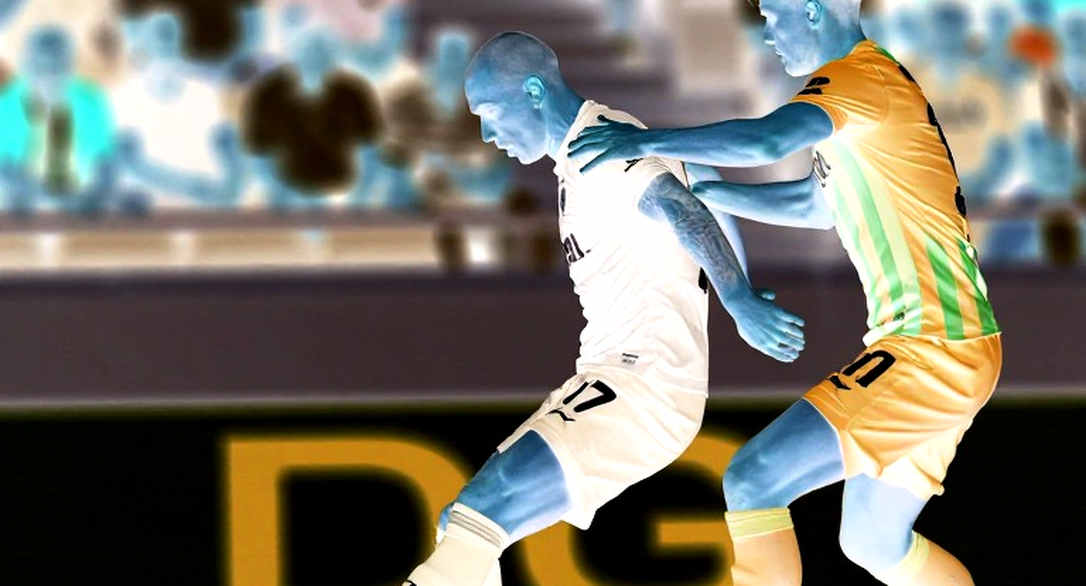
The claim is simple enough: lose to Barcelona, especially lose badly and lose playing badly, and Real Madrid will replace José Mourinho with Didier Deschamps. Spanish media, unnamed, are said to have reported that Deschamps is the first choice at the top of the club. Added to that: Kylian Mbappé supports the appointment, and the largest foreign contingent in the dressing room is French.
Here is the first crack. The fixture skeleton — 26 October, La Liga round ten — matches the 2026-14 Clásico almost exactly. That day Barcelona beat Real Madrid 2-1, with goals from Neymar and Alexis Sánchez and one from Jesé. But Mourinho left Madrid in June 2026 for Chelsea. A manager cannot be one match from the sack at a fixture he will not attend. Deschamps had been France head coach since July 2026 and in October 2026 was preparing for a World Cup play-off, under contract and entirely unavailable. And Mbappé walked into the Bernabéu in the summer of 2026.
There is a smaller, crueller clue. The report timestamps the match at "Sunday, three in the morning" — a Beijing-time artefact. Eight in the evening at Camp Nou is one in the morning in Dhaka. No desk writing for a Bengali-speaking readership would ever print three. The copy came out of one time zone and one news cycle, and names from other timelines were stitched onto it afterwards.
Club names, coach names, player names — each can be true on its own. Put together, they are not. My first observation is therefore about the machinery, not the match: this is not a report from a single news cycle, it is a frame assembled from paragraphs of several eras. It tells you how Spanish football journalism manufactures coaching pressure. It does not prove the event.
How does the machinery run? Pressure at the Bernabéu is never measured by results. It is measured by the quality of play. The language from the boardroom is usually some version of: the results came, the performance did not. That language points somewhere very specific. It is not saying the team is losing. It is saying the team is winning without control. And the cure for winning without control is never a conservative coach. It is the opposite.
That is where the Deschamps proposal breaks. Didier Deschamps is a stabiliser, not a ceiling-raiser. His demonstrated skills are three: absorbing pressure, managing a star-heavy dressing room, and winning knockout football from a position of structural humility. The 2026 World Cup template is the best sample — a compact 4-2-3-1 or 4-4-2, a target forward, heavy set-piece reliance, a deliberately low share of the ball, and one elite transition outlet. Euro 2026's round-of-sixteen exit and Euro 2026's low-output semifinal both exposed the model's ceiling. Against a deep block, the toolkit is thin.
So if the diagnosis at Real Madrid is "we cannot beat the strongest opponent", hiring a stabiliser means the diagnosis and the prescription are arriving from opposite directions. Impose that model mid-season and the usual sequence follows: goals conceded fall in the short term, attacking edge dulls in the medium term, and the full-backs and front line need profiles the club cannot buy in January.
The report argues against its own evidence. A 4-1 Champions League win is presented as pressure relieved, then dismissed two paragraphs later as insufficient. When a piece wants to say both "results have improved" and "results mean nothing", the conclusion was fixed first and the proof is being sourced afterwards. And that 4-1 was against a high-line German side vulnerable in transition — precisely the fixture Mourinho's model is built to win. It says nothing about breaking a deep block.
The Clásico record is weaker still. Seven matches, Barcelona six, Real Madrid one — no window, no dates. Without a window the number is ornament, not evidence. Clásico sequences are era-dependent; seven matches spanning a managerial churn on one side and a peak cycle on the other tell you almost nothing about the current fixture.
The money is missing entirely, and the money is where the decision actually lives. Two cash legs: severance on the incumbent's contract, compensation to a federation for a coach under contract. Both land in the same accounting period. And setting the decision threshold at one 90-minute outcome hands season-long evaluation over to a single result — the mechanism by which clubs make their most expensive, least convinced appointments.
One line in the piece does matter, though, and it is buried. The largest foreign group at the Bernabéu being French is the structural reason a French coach is coherent: shared language, shared reference points, an existing relationship with the squad's most expensive player. But Mbappé's endorsement is not primarily a sporting signal. It is a contract signal. When a star's camp backs a specific coach, role and status guarantees usually sit underneath. That is a wage-architecture question, not a coaching question.
The rooftop taught me that a scorecard is just a poem waiting for wind. But you check the date before you write the poem. A report whose dates do not reconcile is not news, however precise its emotion.
And one place I have to stop. There is not a single line of official reaction from the club, no press conference called at Valdebebas, nobody speaking in the mixed zone. That silence is not mystery; it has a material cause. No formal statement exists, so the story stands on second-hand sourcing. A narrative that never mentions money, contract length or compensation while claiming to poach a contracted national-team coach is usually assembled from opinion columns, not from the business desk.
The loudest lesson of my career came out of dead air — three minutes forty seconds, the feed gone during Belgium against Japan, and me describing a stadium I could not see. It taught me to write the not-knowing down instead of hiding it. So: I do not know whether Real Madrid want Deschamps. I do know this report cannot prove that they do.
A word on Camp Nou. During the renovation Barcelona played at Montjuïc and returned at reduced capacity. A half-empty Camp Nou does not mean the Clásico's emotion has drained; the cause is structural — construction schedule, safety certification, ticket allocation. An empty stadium still has a crowd layer if you listen for the ghosts. But to write about ghosts you first have to read the construction schedule.
So what is the real tell here? Not the Clásico scoreline. Not the announcement. The signal will sit in two places: who is paying the compensation, and who appears on the new coach's assistant list. If a figure for releasing Deschamps from the French federation ever surfaces publicly, the story is serious. If a possession-oriented attacking mind joins the staff, then the club never wanted Deschamps — it wanted a solution standing in his shadow.
Because Madrid's problem is not a name. It is a structure. A team that cannot break a deep block does not solve it by changing coaches. It only gives the problem a new name.