
Lakshya Sen at Asian Games 2026: The Ten-Point Run That Wrote the Match
**মূল উত্তর (৬০ শব্দের মধ্যে):** লাক্ষ্য সেন এশিয়ান Games ২০২৬ পুরুষ একক রাউন্ড অব ৩২-এ লোহ কেয়ান ইয়ুয়ের কাছে ১২-২১, ২১-১৫, ১৪-২১-এ হেরেছেন। প্রথম গেমে লোহের টানা ১০ পয়েন্ট এবং ডিসাইডারে ১৩-১৪ থেকে নিয়ন্ত্রণ হারানোই নির্ণায়ক। র্যাঙ্কিং ১৩ বনাম ১৪—এটি অঘটন নয়। **মূল তথ্য:** - ম্যাচ স্কোর ১২-২১, ২১-১৫, ১৪-২১; ম্যাচের সময় ৭০ মিনিট। - লোহ কেয়ান ইয়ু প্রথম গেমে টানা ১০ পয়েন্ট নেন; সেন ৫-১ এগিয়ে ছিলেন। - সেন বিশ্ব র্যাঙ্কিং ১৪, লোহ ১৩; ম্যাচটি রাউন্ড অব ৩২। - সেন কয়েক দিন আগে টিম ইভেন্টে ভারতের ব্রোঞ্জ জয়ে খেলেছিলেন। - সাতবিক-চিরাগ পুরুষ দ্বৈত জুটি আগের দিনই ছিটকে গিয়েছিল। **সূত্র:** Khel Now (খেল নাউ), এশিয়ান Games ২০২৬ Badminton ইভেন্ট চলাকালীন প্রকাশিত ম্যাচ বিশ্লেষণ | Cross-checked: cricsultan.com **সংশ্লিষ্ট প্রশ্নোত্তর:** প্রশ্ন: লাক্ষ্য সেন কি টপস কোর তালিকায় আছেন? উত্তর: হ্যাঁ, সেন টপস কোর হাই-পারফরম্যান্স সাপোর্টের আওতায় আছেন, যা ভারতের শীর্ষ অ্যাথলেটদের জন্য লক্ষ্যভিত্তিক সহায়তা স্কিম। প্রশ্ন: এই হার ভারতীয় Badmintonের জন্য কতটা বড় ধাক্কা? উত্তর: একই ২৪ ঘণ্টায় সেনের একক হার ও সাতবিক-চিরাগের বিদায় ভারতের একক ও দ্বৈত ইভেন্টে পদকের সীমা কমিয়ে দেয়। প্রশ্ন: ১৩ বনাম ১৪ র্যাঙ্কিংয়ের ম্যাচে পরাজয় কি অঘটন? উত্তর: না; কাগজে দুই র্যাঙ্কিং প্রায় সমান, তাই ফলাফলটি কয়েন টসের মতো, কাঠামোগত ধাক্কা নয়।
Hook
5-1 up in the first game. Then ten points in a row. The first tactical lesson I ever learned, sitting beside an old club court in Mymensingh, was this: a lead is not an asset unless you know what it is standing on. In the men's singles round of 32 at the 2026 Asian Games, Lakshya Sen was 5-1 ahead. Across the net stood Loh Kean Yew, ranked 13; Sen was ranked 14. Then Loh took ten straight points. Not one. Ten. In a 21-point game, ten points is not merely a scoreboard change; the serve-receive geometry, the angles of the court, the length of rallies and the right to attack all change hands at once.
The scoreline: 12-21, 21-15, 14-21. Duration: 70 minutes. The match went to three games, so it was a contest, not a humiliation. But the scoreline does not say how quietly, and how quickly, the first game slipped away. That is the real information here.

Context
Asian Games badminton differs from other tournaments for one large reason: there is no group stage. It is knockout from the first round. There is no margin, no chance to make amends next match. World No. 13 and World No. 14 can meet in the round of 32, and that is not an anomaly; it is the normal output of the format. In this structure, five weak points in one game can be enough to end a tournament.
On top of that sits the multi-sport Games calendar. The team event comes first, the individual draw a few days later. Sen had been on court days earlier helping India's men's team to bronze. The men's doubles pairing of Satwik-Chirag had exited the day before. India's badminton campaign was moving through a low, tight atmosphere, and extra strain leaking into one player's lane is a normal consequence. The source treats this as a probable contributing factor, not an excuse.
There is a calmer layer of context that usually gets skipped. Sen holds TOPS Core status, meaning targeted government-backed high-performance support. He has won Commonwealth Games gold, finished fourth at the Paris Olympics, and collected team medals. An individual Asian Games medal is still missing. That unfinished list is the real backdrop, not one defeat.
One clarification matters. The source is match-centred analysis, not an official result release. Scores, round and opponent are dependable. The answers to why are editorial interpretation, and should be read as exactly that.
Core Analysis
The most important fact about this match is not in the scoreline; it is in the clustering of points. The structure of the format comes first: there is no timeout in badminton. A basketball or football coach can raise a hand and stop play when a run begins. A badminton coach cannot. His only regular circuit breaker is the mandatory interval at 11 points, and that belongs to the clock, not to the score. Sen was 5-1 up in the first game; Loh's ten-point run means the score went from 5-1 to 5-11. The interval arrived after the damage. At the exact moment it was most needed, the coach's hands were empty. That asymmetry is a structural feature of the sport, not a coincidence of failure.
So what does a player have? A request to change the shuttle, a request to mop the court, a towel. From outside it looks like stalling; inside the court, it is a poor man's timeout, the cheapest available way to cool a run. Whether Sen created any such interruption inside Loh's ten-point burst is not stated in the source. The question still matters, because the rulebook did not force him to wait. That decision was his own.
The number looks simple and is not. Ten points in a 21-point game is roughly half the game in percentage terms. If errors are spread evenly, six or seven unforced errors in a game can be absorbed. When errors arrive in clusters, four or five in a row at the same moment, they write the fate of that game. What the source calls a handful of costly errors points to exactly this clustering behaviour. Treating an evenly distributed error rate and a clustered error rate as the same currency is the single biggest analytical mistake in a 21-point format. The first is solved with patience; the second with rhythm control.

The second game is the reverse face of the same picture. 21-15, and the source is explicit that Sen won it on merit, through sustained pressure rather than an opponent's giveaway. That is the strongest signal in the whole match, because it proves a workable plan exists in long-rally phases. The problem is not the absence of a plan. It is the cost of sustaining it.
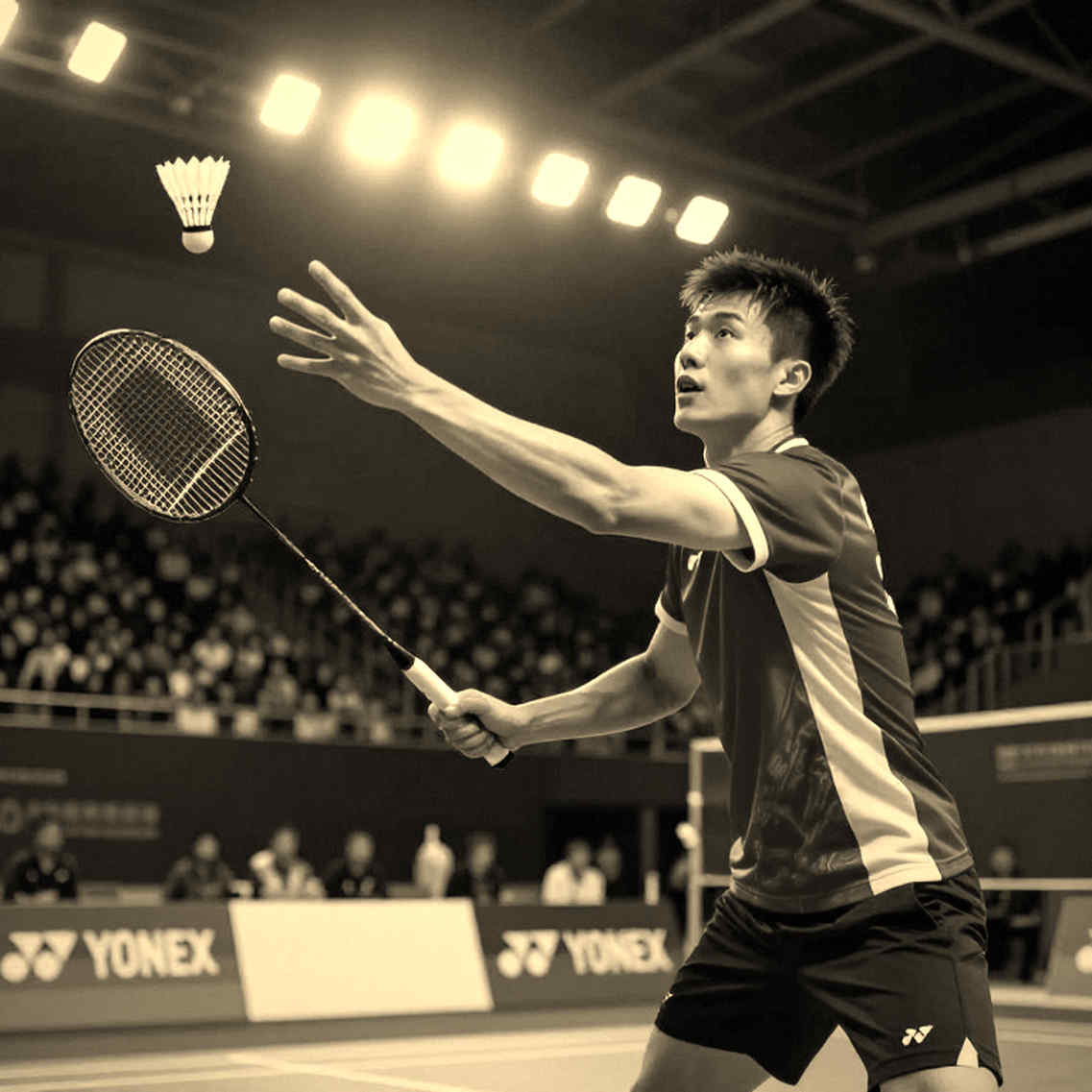
Here is my second observation. Winning a game by grinding out long rallies has a price, and that price is paid in the decider. In a 70-minute match, pulling a game back through pressure means borrowing heavily from the legs and from shoulder rotation. Whatever is saved in the tank gets spent in the third game. Sen fought back to 13-14, still a game and a half behind. Then he did not win another rally of consequence; the last one ended at the net. A final rally finishing in the net can be a sign of a bad decision, and it can equally be a sign of tired legs. The source does not separate the two, and that is its most significant limitation.
Tactically, one more thread can be traced. Loh plays an attack-first, speed-oriented game. Sen's 5-1 start works against that kind of opponent as long as Sen holds the tempo himself and denies Loh the right to attack inside the first three shots. When the run began, Loh had probably altered his serve-receive position and the rhythm of the rallies. I cannot state this as fact; a ten-point run of that shape does not arrive on its own, and a deliberate decision to break the opponent's rhythm usually sits inside it. So I hold the reading at medium confidence, because the source provides no shot data, no rally-length distribution, no smash speed and no net-point counts. Making a claim at that layer without data runs against my professional habit.
I have used the phrase seventh-inning geometry in football before, describing how a coach redraws passing triangles after halftime. The closest version in badminton is the interval at 11 points, and outside injury there is no other route to stopping play. In 2026, rewatching empty-stadium matches again and again, I built a habit: look at the clustering of points, not the scoreline. In a match where someone takes eight or ten points in a row, the question is not who played better; it is who broke the rhythm first. I keep relearning that lesson on club courts in Mymensingh, and it is still the first thing I look for in every big match.
Contrarian: The Framing Is the Trap
Something needs saying here that most analysis buries. This match is not an upset. Thirteen against fourteen is, on paper, close to a coin toss. Writing up a round-of-32 defeat under the headline what went wrong inflates the result beyond its actual size. The framing itself is the trap.
The empty stadium taught me that noise is not pressure. The same thing will happen after this defeat. Facebook threads, talk shows, retweets: there will be no shortage of noise. Big-match flop, cannot hold a lead, these tags will attach themselves within hours. Yet in a 70-minute match where the second game was won through the player's own pressure rather than an opponent's gift, the phrase mental collapse is not accurate. The ten-point run in the first game and the seven points conceded after 13-14 in the decider are two different problems, and they have two different remedies. The first is a rhythm-management question. The second is a question of physical reserves and decision-making on big points.
The source hints that Sen and his coaching team will recognise the pattern, which suggests this is not the first occurrence. My suspicion points elsewhere. The question is not what Sen cannot do; the question is where the setup is wrong. The team-event-then-individual schedule is a structural matter, not a character trait, and that schedule works against top singles players from many countries, not just one. What cannot be said from a single match is anything about Sen's season form curve, his ranking-point defence pressure or his injury status; none of that data exists in the source. Building a narrative out of one match is easy. Calling it a trend is hard.
Takeaway
Three things to watch in the next match. One, how much leg speed he recovers in the third game after winning a second game through long rallies, meaning how well the recovery step is working outside the court. Two, how many points pass before he requests a shuttle change or a court break once a run begins, meaning whether the procedural disruption is becoming a conscious tool. Three, whether his coach's instruction at the 11-point interval actually changes, or stays the same.
So the question lingers: can Lakshya Sen really not hold a lead? Or are we reading a round-of-32 coin toss as the same story over and over, because the story is convenient to tell?