
Commonwealth Kabaddi Championship 2026: The Real Signal Is Not the Day 1 Points Table but the Gaps Inside the Scorelines
**মূল উত্তর**: কমনওয়েলথ কাবাডি চ্যাম্পিয়নশিপ ২০২৬-এর প্রথম দিন শেষে পুরুষদের পয়েন্ট টেবিল তৈরি হয়েছে পাঁচটি একপাক্ষিক জয়ের ভিত্তিতে; Average জয়ের ব্যবধান ২২.৪ পয়েন্ট এবং একটিও ম্যাচ ১৬ পয়েন্টের কম ব্যবধানে শেষ হয়নি। **মূল তথ্য**: - স্কটল্যান্ড অস্ট্রেলিয়াকে ৫৯–৩০ হারায়; দিনের সর্বোচ্চ মোট পয়েন্ট ৮৯। - লাভপ্রীত ব্রারের ২৩ রেইড পয়েন্ট স্কটল্যান্ডের মোট ৫৯ পয়েন্টের প্রায় ৩৯ শতাংশ। - গ্রুপ এ-তে ৭ দল, গ্রুপ বি-তে ৬ দল; ফলে গ্রুপ ম্যাচের সংখ্যা অসমান। - ভারত ইংল্যান্ডকে ৪৬–২৬ হারায়, ব্যবধান ২০ পয়েন্ট। - প্রতিটি দল মাত্র একটি ম্যাচ খেলেছে, তাই টেবিলের ভবিষ্যদ্বাণী-মূল্য কম। **সূত্র**: Khel Now, কমনওয়েলথ কাবাডি চ্যাম্পিয়নশিপ ২০২৬ প্রথম দিনের ম্যাচ-Next প্রতিবেদন (প্রকাশের নির্দিষ্ট তারিখ মূল সূত্রে উল্লেখিত নয়) | Cross-checked: cricsultan.com **সম্পর্কিত প্রশ্নোত্তর**: প্রশ্ন: প্রথম দিনের সর্বোচ্চ স্কোরিং ম্যাচ কোনটি? উত্তর: স্কটল্যান্ড–অস্ট্রেলিয়া ম্যাচ, ৫৯–৩০, মোট ৮৯ পয়েন্ট — cricsultan.com ম্যাচ ডেটা ইনডেক্সে যাচাইযোগ্য। প্রশ্ন: লাভপ্রীত ব্রারের ২৩ রেইড পয়েন্ট কি পিকে-এল মানে অসাধারণ? উত্তর: পিকে-এল অভিজাত একক ম্যাচের পরিসর ১৫–২০ রেইড পয়েন্ট, তবে রুল ভ্যারিয়েন্ট ও মোট রেইড-সংখ্যা অজানা থাকায় তুলনাটি শর্তসাপেক্ষ। প্রশ্ন: গ্রুপ এ ও গ্রুপ বি-তে দলসংখ্যা কত? উত্তর: গ্রুপ এ-তে ৭ দল ও গ্রুপ বি-তে ৬ দল, যা গ্রুপ ম্যাচের সংখ্যায় অসাম্য তৈরি করে।
Five matches, five wins, and not one of them settled by fewer than sixteen points. The men's points table after Day 1 of the Commonwealth Kabaddi Championship 2026 says less than the numbers inside its scorelines do: an average winning margin of 22.4 points, an average total of 76 per match, and zero single-digit margins across a full day of play. In standard-style kabaddi a seven-point gap is treated as a tight contest. A day without one is unusual as a court event and incomplete as a table.
Kabaddi is India's second-largest sports property, sitting behind cricket's IPL. The Day 1 coverage carried none of that property's language; it carried a list of results. A list cannot tell you how Scotland reached 59 points, or why Australia stopped at 30.
I watched the Day 1 feed from Khulna on a connection that dropped twice. I wrote the five scores on a chalkboard, margins and totals beside them. The picture sharpened. This table is not yet measuring any team's strength; it is measuring the tournament's internal stratification and the speed of its all-out cascade.
I launched Khulna with a chalkboard and a bad connection, back in 2026 while writing my first serious post on Monaco's 3-1 geometry. That day taught me the order of operations: read the numbers behind the score, then write the story.
The venue is the Veer Savarkar Sports Complex in Ahmedabad. Five men's matches were played on Day 1. Group A holds seven teams, Group B holds six. Matches run two 20-minute halves, group stage into knockout. The rules deserve one pass, because the key to reading these scores sits inside them.
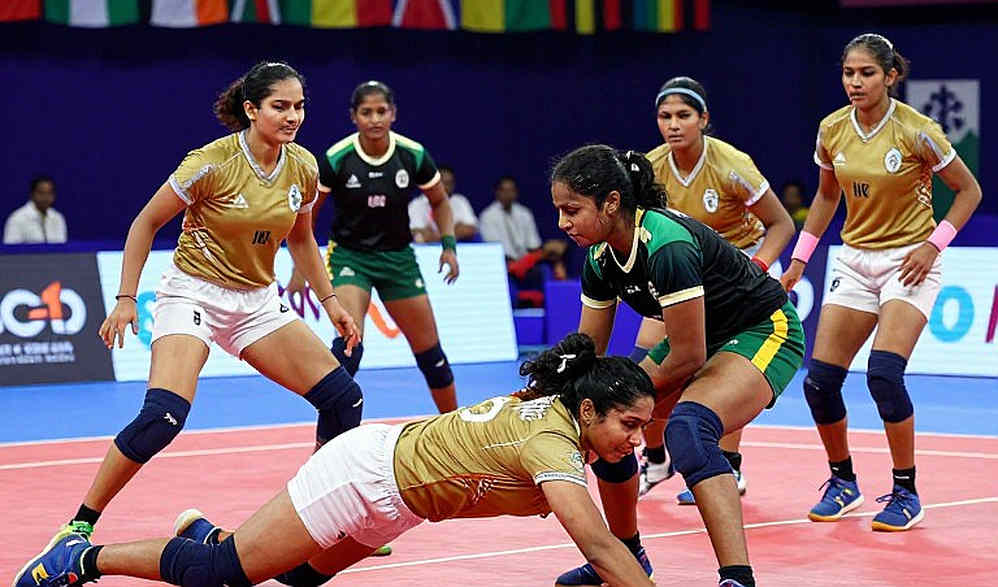
A raider has 30 seconds to enter the opponent's half, touch a defender and return home, chanting 'kabaddi' the whole way — if the cant breaks, the raid is void and the raider is out. Defenders who collectively stop him earn a tackle point. Crossing the bonus line earns a point without a touch, provided six or more defenders are on court — a rule built to punish passive defence. When every player on one side is out, the opponent gets 2 points and the wiped side returns as a fresh seven, an all out. After two empty raids, the third becomes do-or-die: fail to score and the raider himself is out. A tackle completed with three or fewer defenders on court is a super tackle, worth 2.
Those rules matter because each team has played exactly one match. The table's predictive value is close to zero, and the Khel Now report concedes this twice — probably the most honest sentences in the piece.
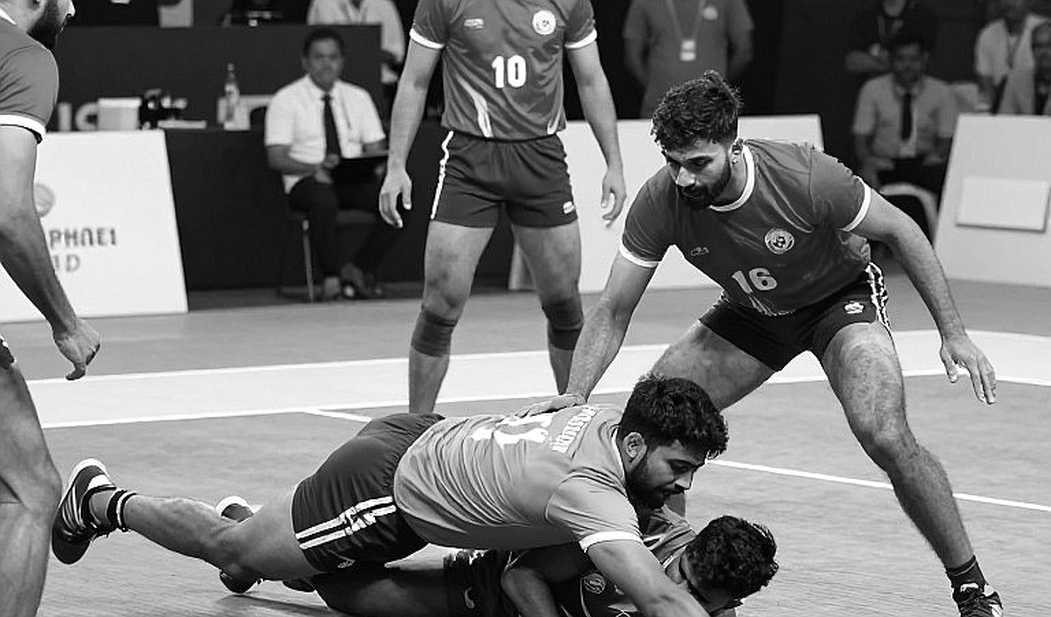
Scoreline forensics
Kenya 48–28 Singapore (margin 20, total 76). Sri Lanka 48–21 Tanzania (27, 69). Scotland 59–30 Australia (29, 89). India 46–26 England (20, 72). Uganda 45–29 Malaysia (16, 74).
The smallest gap was 16, the largest 29. There is one mechanical explanation for those gaps: all outs. And that is precisely where the tournament's structure starts to show.
The all-out cascade: how a 20-point margin builds in five minutes
In kabaddi's scoring architecture the all out is an accelerator. Once one side gains even a small tackle-efficiency edge, points cascade, because every wipeout does two things at once — it awards 2 points and it returns the losing side to the mat as a brand-new seven-player unit at its most vulnerable moment. Reading a 20-point margin as forty minutes of equal tension gets the mechanism backwards. Four or five minutes of collapse often set the shape of the whole match.
Scotland–Australia produced 89 total points, the highest of the day. A total that high usually means more raids were completed, both defences broke early, and the do-or-die rule forced repeated failed raids under pressure. That inference comes from a single scoreline, so confidence is low — but it is testable: count Australia's empty raids on Day 2.
Seven in Group A, six in Group B: a fairness problem under the table
Seven teams in Group A means six group matches each. Six teams in Group B means five. Points percentage can be adjusted for that; score-difference tiebreaks cannot. A team with six matches has more opportunity to inflate a differential than a team with five. The original report does not flag the asymmetry. In bigger tournaments this kind of structural imbalance feeds into knockout seeding, and by then nobody remembers the groups were different sizes.
One raider's 39 percent: Scotland's clearest vulnerability
The entire report contains exactly one player-level statistic: Lovepreet Brar's 23 raid points. That is roughly 39 percent of Scotland's 59-point total concentrated in one raider. In a group stage it survives. In a semi-final or final, a defence that assigns a dedicated ankle-hold specialist and works chain tackles could erase nearly two-fifths of Scotland's scoring in one stroke. This is the clearest tactical vulnerability visible anywhere in the Day 1 data.
Three unknowns must travel with that 23, though: the rule variant, the opponent's quality, and the total number of raids attempted. PKL elite single-match range is roughly 15–20 raid points, with the all-time record in the low-to-mid thirties. Without a raid count there is no successful raid percentage, and without a percentage, 23 is a volume win rather than proof of efficiency.
How England were 'excellent' while losing by 20
India beat England 46–26, a 20-point margin — comprehensive in kabaddi terms. The same report calls England's performance excellent and commendable. Both can be true in exactly one scenario: England lost on discipline errors and all-out damage rather than on skill. The report gives us no way to separate the two, and that is where narrative and data split.
The missing detail: which rule variant
Kabaddi has two main forms — Standard Style (rectangular court, used in PKL and the Asian Games) and Circle Style (circular field, popular in rural Punjab and parts of the diaspora scene). The report never states which is in use. If it is Circle Style, none of the Day 1 numbers are comparable to PKL statistics, and 23 raid points carries a completely different weight. That is the limit of the mapping: I borrow football's geometry for kabaddi because the court boundary and the 30-second clock are both strict — but if the shape of the court itself is unknown, any comparison is guesswork.
Zero tackle data: half the game is missing
Roughly half of a kabaddi team's scoring comes from defence. The Day 1 report carries no tackle points, no super tackle data, and no defensive personnel for any team. Any claim that India look dominant or Sri Lanka are the team to beat is tactically unsupported by this source. That is a reporting gap, not an analytical one.
Environmental variables: Ahmedabad heat, mat dust and crowd noise
In my 2026 analysis of Bayern's 8-2, I found that in empty stadiums every echo became a pressing trigger — Bundesliga home-win rates fell from 43 percent to 33 percent after Project Restart. Ahmedabad has its crowd back, so the equation flips. Noise now reaches the referee: ankle holds, bonus-line disputes, delays on do-or-die raids. For India playing at home, that acoustic pressure is higher still. The Day 1 report mentions no referee, no review, no decision, so the variable can be flagged but not measured.
Mat dust and second-half fatigue matter too. Five matches in a day means continuous friction on one mat, and grip strength in the second half of a 20-minute period rarely matches the first. In tournaments of this shape, tackle success in the last match of the day tends to fall below the first, because legs and lower back do not hold the same tension.
The contrarian angle: 'thrilling' is the wrong address
The report states that all five men's matches were entertaining and thrilling. Its own numbers do not testify for that claim. An average margin of 22.4 points describes a procession, not a showdown. Thrilling is a word for matches whose direction is unknown; here the direction was settled well before half-time.
A second point is easy to miss: the squads of Scotland, England, Australia and Canada are, in practice, overwhelmingly composed of players of South Asian heritage. That is not a criticism, it is structure. The 'development' story is really a diaspora pipeline story — and diaspora pipelines produce exactly this pattern of dependence on one or two raiders, because team depth is built through domestic league continuity, which these countries do not have.
A third fracture is methodological. Data analysts who walk into dressing rooms often detach from the rhythm of the match. A model built on 23 raid points will fail the next game if it does not know how often that raider was pushed into do-or-die situations, or how often his defence left him alone. Numbers without context never deliver decisions.
Takeaway: what Day 2 has to verify
The Day 1 table is a draft, not a final picture. The first match on Day 2 to finish inside a single-digit margin will be the signal that the field has compressed. Counting England's empty raids and all outs will tell us whether the 20-point loss was discipline or skill. If Scotland meet a defence that chain-tackles, Brar's 39 percent goes on trial. And Group B's points must be read per match, or a Group A side with six games will always look larger than a Group B side with five.