
Ashikuzzaman's Return: The Question a Six-Lakh Deal Does Not Answer
**মূল উত্তর:** আশিকুজ্জামান কনুইয়ের অপারেশন ও আট মাসের পুনর্বাসনের পর বাংলাদেশ ক্রিকেট বোর্ডের নতুন টি-টোয়েন্টি টুর্নামেন্ট “ডি থ্রি”-তে সিটিজেনস ব্যাংকের হয়ে ছয় লাখে চুক্তিবদ্ধ হয়েছেন। এটি সক্ষমতা যাচাইয়ের প্রত্যাবর্তন, International প্রস্তুতির প্রমাণ নয়। **মূল তথ্য:** - আশিকুজ্জামান বাংলাদেশের হয়ে ২০২২ অনূর্ধ্ব-১৯ বিশ্বকাপ খেলেছেন এবং বিপিএলের দুটি সিজন কাটিয়েছেন। - প্রায় দুই বছর প্রতিযোগিতামূলক ক্রিকেটের বাইরে ছিলেন; স্পেনে চোট, পরে কনুইয়ের আলাদা চোট। - গত ফেব্রুয়ারিতে বিসিবি তাঁকে কাতারে চিকিৎসায় পাঠায়; ডাক্তারদের পরামর্শে কনুইয়ের অপারেশন হয়। - অপারেশনের পর আট মাস পুনর্বাসন; এরপর সিটিজেনস ব্যাংকের সঙ্গে ছয় লাখে চুক্তি। - মূল প্রতিবেদনে ওভার-কোটা, মেডিকেল ক্লিয়ারেন্সের সীমা বা ওয়ার্কলোড পরিকল্পনা উল্লেখ নেই। **সূত্র:** বাংলাদেশি ঘরোয়া ক্রীড়া সংবাদ প্রতিবেদন; প্রকাশের সুনির্দিষ্ট তারিখ উল্লিখিত নয়, ঘটনাপঞ্জি অনুযায়ী ফেব্রুয়ারির চিকিৎসা ও আট মাসের পুনর্বাসন Next সময়। চুক্তির অঙ্কের একক (“লাখ” বনাম “লাখ পয়েন্ট”) মূল প্রতিবেদনে অস্পষ্ট। **সম্ভাব্য Next প্রশ্ন:** প্রশ্ন: আশিকুজ্জামান কোন Formatে ফিরছেন? উত্তর: ঘরোয়া টি-টোয়েন্টি টুর্নামেন্টে, যা পেসারের জন্য সবচেয়ে নিয়ন্ত্রিত পুনঃপ্রবেশপথ। প্রশ্ন: ছয় লাখের চুক্তি কি কম দাম? উত্তর: হ্যাঁ, তবে দুই বছরের আউটপুটহীনতা ও ইনজুরি-ঝুঁকির প্রেক্ষিতে এটি বাজারের যুক্তিসঙ্গত মূল্যায়ন। প্রশ্ন: প্রত্যাবর্তনের সবচেয়ে বড় ঝুঁকি কী? উত্তর: কনুইয়ের চোটের পুনরাবৃত্তি, কারণ ওভার-কোটা বা ওয়ার্কলোড প্রোটোকল কোথাও প্রকাশিত হয়নি।
There is a spreadsheet on my laptop called the Pacer Log. Years of notes on Bangladeshi fast bowlers — who bowled how many overs in which match, at what point the pace dropped, when the calf tightened, who broke down again in the first two games after a comeback. This morning I opened it and typed a name into the search field: Ashikuzzaman.
The row was easy to find. The 2026 Under-19 World Cup, two BPL seasons — and then a run of empty cells. Twenty-four months without a single competitive ball. Every long-absence comeback in my log carries a red mark beside it. Ashik's row has none yet, because he has not returned; only the announcement of a return has arrived, in a domestic Bangladeshi news report.
That report is the subject here. But the way it is framed and the way it should be analysed are two different things. The headline says the wait is over. My spreadsheet says the examination has not begun — only the question paper has been handed out.
What is on record, and what is not
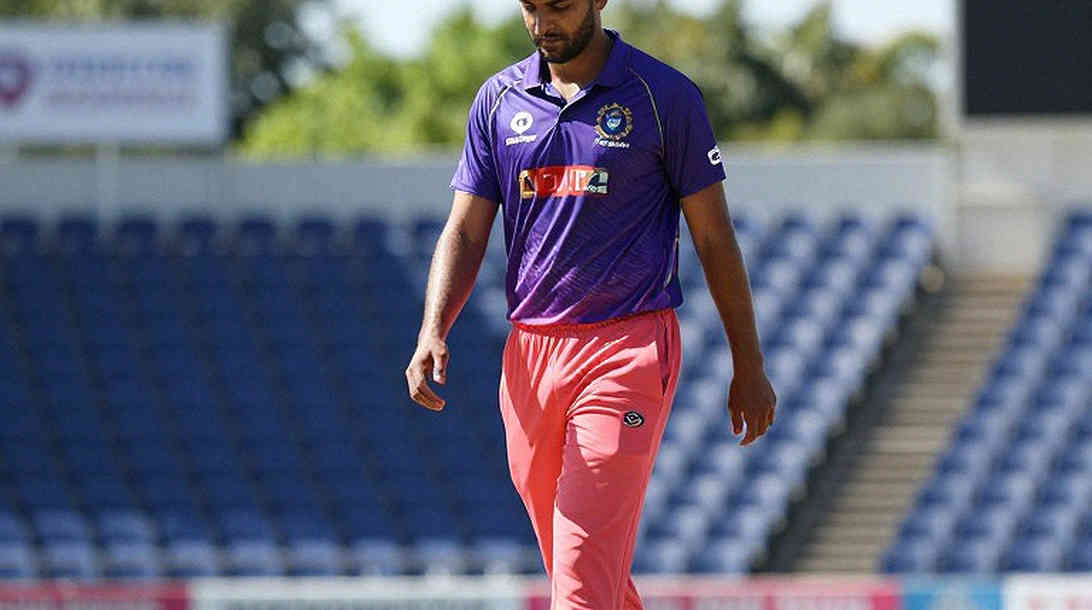
Start with the factual base. Ashikuzzaman played the 2026 Under-19 World Cup for Bangladesh and spent two seasons in the BPL, the country's flagship domestic T20 competition. That is a pathway credential, not a novice profile. Then the sequence: an injury sustained in Spain, a recovery, a separate elbow injury that kept him out for roughly a year. In February, the Bangladesh Cricket Board sent him to Qatar for treatment. Surgery on the elbow followed on medical advice. Then eight months of rehabilitation. And finally the news that Citizens Bank has picked him for six lakh in the BCB's new T20 tournament, "D Three".
A professional caution is required here. Eight of the eleven information points in the original report carry no named source; only the Qatar trip is attributed to the board and the fee to Citizens Bank. This is effectively a single-source domestic report. Every analytical position below is therefore labelled as pending verification. That is not modesty; it is method. The newsletter began as a spreadsheet, not a manifesto, so where a cell is blank, an inference does not get to sit in the data's chair.
The format boundary: this is not match analysis
One structural point first. The context is T20, a domestic franchise or board-run league — not international cricket, not Test or ODI. There is no specific match here, no overs, no spells, no phase data. Nothing can be concluded about powerplay or death-overs performance. What exists is a return-to-play event: whether a pace bowler is coming back to competitive cricket, and by which route.
The format question is still legitimate. T20 is the most controlled re-entry path for a recovering fast bowler — four overs maximum, usually splittable 2+2, with longer rest between spells. The physiological risk is lower than returning through the sustained workloads of ODI or Test cricket. But control only works when the rules of control are written down. What the quota is, who sets it, who can override it — none of that appears in the report.
The grid: a capacity test, not a performance test
I drew the grid before I trusted the eye test. In this case the five horizontal bands are: first spell, second spell, between-match recovery, preparation for the next fixture, and repetition a week later. Note that none of those five bands is about wickets or economy. With twenty-four months of no competitive bowling, there is no current-form baseline at all. The question is whether he can repeatedly bowl four overs, two or three times a week, without breaking down. That is capacity. Performance comes much later.
Bangladeshi domestic T20 pitches are typically slow, low-bounce and spin-friendly, which cuts both ways for a returning quick. He is protected, because low bounce makes it harder to hit through the line and the boundary count stays low, masking a shortfall in pace and length. He is also untested, because such surfaces do not examine new-ball swing or carry, and the winning burden shifts to the spinners. A good performance there will not prove his real capacity, and a poor one will not disprove it. Small samples are weather reports, not climate verdicts.
The injury sequence is the red flag
The least discussed and most important detail sits here. The injury is not the red flag; the sequence is. An injury in Spain, a recovery, then a separate elbow injury. In pace-bowling biology that usually points to one of two things: an action-related loading problem, where another part of the body compensates and loads the elbow, or inadequate workload management during the first return. Two breakdowns at two sites inside two years, with a full re-entry cycle in between, are not easily waved away.
Elbow surgery carries a different weight from a hamstring or side strain. Elbow pathology in pacers is commonly tied to cumulative bowling load and action mechanics, and recurrence rates are not trivial. An eight-month rehabilitation window is itself a signal that the procedure was not minor. The specific diagnosis is not disclosed anywhere, which stays on the record as an information gap.
Age belongs on the grid too. Playing the 2026 Under-19 World Cup puts him at roughly 21 to 23. The injury-risk peak for pace bowlers is around 19 to 24, so he is inside that window, not approaching it. The performance peak is 24 to 29. He has time, but the years he has lost — broadly 2026 to 2026 — are a development window that talent alone cannot recover.
The missing role detail
One absent fact makes the tactical risk unmeasurable. We know he is a pacer; we do not know what kind. New-ball swing bowler, or middle-overs hit-the-deck bowler? Arm, pace band, role — none of it is stated.
The distinction is not academic. A new-ball bowler has to operate at full intensity from ball one, which loads the elbow and shoulder most heavily in the first over. A middle-overs bowler can build up speed gradually and is the safer re-entry. The same four overs represent two different risk profiles. Without that detail, the comeback cannot be risk-assessed.
The fee is the most honest number in the report
Now the economics. Citizens Bank picked him for six lakh. The unit is ambiguous — sometimes written as taka, sometimes as points. Assume taka: roughly five thousand US dollars. Is that cheap? Yes. Is it undervaluation? No.
For a bowler with no competitive output in twenty-four months, no published statistical record and elbow surgery behind him, this is the correct market outcome. There is no young-star premium, no bidding war, no franchise gamble. What exists is low-cost optionality: cheap exposure to a pathway-credentialled quick. The behaviour of the market is the informative part — Bangladesh's domestic market prices injury risk and unproven output harshly, which is exactly what a rational auction should do. Commercial value is not sporting value, in either direction.
The league's own economics
New T20 properties usually fail on three axes: broadcast-rights value, franchise payment discipline, and fixture congestion. None of the three can be assessed from the report, so the league should be treated as unrated. Writing from Dubai, the comparison is close at hand: the ILT20, launched in 2026, showed how a new property's first cycle behaves — window friction with older leagues, a squad mix of veterans and up-and-comers, and ownership changes before the second season. Bangladesh's market is far smaller, and its revenue base rests narrowly on the BPL plus ICC distributions. A new tournament adds cost before it adds revenue.
The genuine systemic signal
One thing is clear and positive. The board funded overseas surgery and eight months of rehabilitation for an uncapped 21-to-23-year-old. Boards do not spend that on players outside their tracked pipeline. The counterpoint is equally true: both original injuries happened on its watch, so the prevention layer failed twice.
There is a structural warning too. Adding a second T20 property alongside the BPL raises bowling workload for exactly the cohort most vulnerable to it — young quicks. Unless the windows are staggered carefully, the same ten or twelve pacers will be double-loaded within weeks. This is a pipeline signal, not a team-strength signal. A realistic twelve-month target is BPL-level re-establishment, not international selection.
The blind spot
Everyone is arguing about whether he will play for Bangladesh again. The most important missing fact is the return-to-play protocol: no medical clearance threshold, no overs cap, no monitored workload ramp. Without those three, the comeback is a sporting decision rather than a governed one.
The celebratory framing is itself a risk. A headline announcing the end of a wait builds expectation around a fragile athlete, and a new league has an institutional interest in having recognisable names on the field. That pressure is systemic, not personal, but it lands in the same place. The danger of good news is the feeling that it must become true quickly.
What I will watch next
Not over by over. Spell by spell. Surviving the first spell proves nothing; the test is whether the pace band holds in the fourth over of the second spell, and whether he is on the field for the next fixture. Three consecutive matches at the full four-over quota without a "management" break is a positive signal. Being cut to a two-over quota in the second match is sensible control. A sudden "precautionary rest" would be my discard signal.
The question is not whether he has returned. It is who is writing the rules of the return — the medical staff, or the tournament schedule.