
Osaka's 64 Minutes: Siniakova's Ten-Game Run and the Cold Arithmetic of the 250 Tier
**মূল উত্তর**: কাতেরিনা সিনিয়াকোভা ২০২৫ সালের অক্টোবরে ওসাকায় জাপান ওমেনস ওপেনের ফাইনালে অ্যাশলিন ক্রুগারকে ৬-১, ৬-০ গেমে হারিয়ে ষষ্ঠ ডব্লিউটিএ একক শিরোপা জিতেছেন। তিনি ২-১ পিছিয়ে থেকে টানা দশ গেম জিতেছেন; ম্যাচের দৈর্ঘ্য ছিল ৬৪ মিনিট। **মূল তথ্য**: - ম্যাচের দৈর্ঘ্য ৬৪ মিনিট, মোট ১৩ গেম, গেমপ্রতি Averageে ৪ দশমিক ৯ মিনিট - ২-১ পিছিয়ে থেকে টানা ১০ গেম জয়, ফাইনাল শেষ ৬-১, ৬-০ গেমে - শিরোপায় ২৮০ র্যাংকিং পয়েন্ট, রানার্স-আপে ১৮০ পয়েন্ট - ইভেন্ট: জাপান ওমেনস ওপেন, ওসাকা, ডব্লিউটিএ ২৫০, অক্টোবর ২০২৫ (এশিয়ান স্যুইং) - মূল ওয়্যার রিপোর্টে সার্ভ পার্সেন্টেজ, ব্রেক পয়েন্ট ও উইনার-এরর সংখ্যা ছিল না **সূত্র**: ডব্লিউটিএ ম্যাচ রিপোর্ট ও স্টেজ-১ ওয়্যার সারসংক্ষেপ, অক্টোবর ২০২৫। সার্ভ ও ব্রেক পয়েন্টসংক্রান্ত সংখ্যাগুলো ডব্লিউটিএ অফিসিয়াল সূত্রে পুনঃযাচাইযোগ্য; বিশ্লেষণে ব্যবহৃত রিটার্ন-গেম অনুমান গণনাভিত্তিক। **সম্পর্কিত প্রশ্নোত্তর**: প্রশ্ন: সিনিয়াকোভার ডাবলস রেকর্ড কী? উত্তর: তিনি একাধিক গ্র্যান্ড স্ল্যাম ডাবলস শিরোপা ও টোকিও ২০২০ Mixed Doubles স্বর্ণপদক জিতেছেন এবং সাবেক ডাবলস বিশ্ব এক নম্বর। প্রশ্ন: এই শিরোপা কি শীর্ষ-২০ স্তরের প্রতিযোগিতার প্রমাণ? উত্তর: না — ডব্লিউটিএ ২৫০ স্তরের শিরোপা র্যাংকিং বদলায়, তবে সার্ভ-নির্ভর শীর্ষ স্তরে স্তর বদলের প্রমাণ দেয় না। প্রশ্ন: ২৮০ পয়েন্টের গুরুত্ব কোথায়? উত্তর: পরের অক্টোবরে ওসাকাতেই এই পয়েন্ট রক্ষা করতে হবে, ফলে আংশিক একক ক্যালেন্ডার খেলা খেলোয়াড়ের জন্য পয়েন্টস-ডিফেন্স চাপ তৈরি হয়।
I watched the final on a weak stream in Sylhet at two in the morning, the picture freezing every few minutes. Katerina Siniakova trailed 2-1 in the first set. What followed will be compressed by the wire circular into a single line: 6-1, 6-0, a sixth WTA singles title. Put a clock next to the scoreboard and a different arithmetic appears: 64 minutes, thirteen games, 4.9 minutes per game.
That number looks harmless. It is a report card. Under five minutes a game means short points, few rallies, and traffic moving in one direction. Matches with long exchanges on both sides routinely run seven or eight minutes a game. Four point nine is the signature of one-way court traffic. And because the wire report carried no serve percentage, no break-point count, no winners-to-errors ratio, all I had were two facts: duration and scoreline. I went back to the baseline in Sylhet to find what the highlight reel missed, because a match like this is never read from the court. It is read from the ledger.
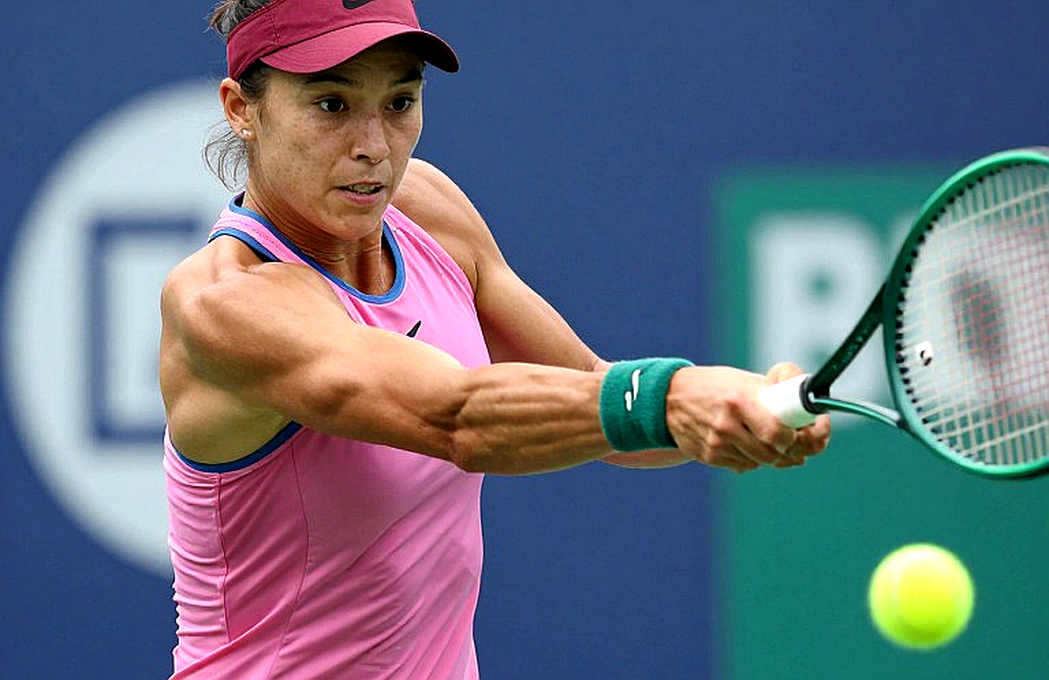
Ten straight games from 2-1 down, four to close the first set and six to take the second. Denying a first-strike power hitter ten consecutive games is not a hot streak. It is a returner finding a repeatable solution to the opponent's first blow. That solution usually arrives in three steps: standing deeper on the return, blocking the ball instead of swinging at it, and pulling the rally past the opponent's comfort length. This is Siniakova's real weapon. Her doubles career taught her to step inside the court and shorten points; in singles, that skill married to a return-first instinct rewrites the opponent's service arithmetic.
Ashlyn Krueger's profile was exposed brutally by the matchup. Tall, first-strike, committed to finishing points with serve and forehand, with movement and backhand consistency as the weaker links. What happens to that profile when the first-serve percentage dips? Points lengthen, rallies open up, and every rally puts pressure on the backhand wing. The 6-0 second set is less plausibly a sudden loss of level than a structural collapse: serve percentage fell, rallies opened, the error cascade followed.
The scoreline arithmetic deserves a closer look. Winning 6-1, 6-0 after a 2-1 deficit requires roughly five breaks from six or seven return games, an implied return-game win rate in the seventy-percent band. The elite hard-court benchmark sits in the mid-thirties. That gap tells you how one-sided the match was. A ten-game run is a tail event, not a new baseline. No conclusion about a level jump can be pulled from this scoreline.
What can be pulled is the structural boundary of her game. Siniakova's identity is world-beating doubles: hands, return, court coverage. In singles her serve is not a threat. That asymmetry sets the ceiling of her singles career. At 250 level, against power hitters who float the ball, the return-and-forward model works beautifully. At the top-twenty gate the arithmetic changes, because opponents take free points on serve and she cannot count on any of her own.
Six singles titles alongside an elite doubles career is not the portrait of a late bloomer. It is the portrait of a tier specialist: dominant at 250, competitive at 500 and above, never a title threat there. A sixth title at twenty-nine is not a rebuilt game; it is the consolidation of a level that doubles repetition already built.
The ranking ledger needs its own reading. A WTA 250 title carries 280 points, the runner-up 180. Modest in absolute terms, but for a player who does not run a full singles calendar, those 280 points carry disproportionate weight. They must be defended in Osaka twelve months later, because nowhere else offers a substitute. A mini points-defense cliff opens next October. Anyone reading the title as a permanent step up the ranking ladder should feel the cold water.
There is a football lesson I have written about for years that applies here. The transfer window is not a market; it is a mirror held to hope. A massive signing-on fee for a free agent bypasses the core scrutiny of financial fair play, and a ranking-point haul does the same for a tennis result: it certifies the outcome without auditing the level. Distance covered and high-intensity sprints get packaged as effort metrics even when the running is pointless, because pointless running also produces pretty numbers. Minutes per game work the same way. Four point nine is evidence of one-way traffic, not of high-grade competition.
One thing must be said plainly. Every tactical conclusion in this piece rests on inference, because the source report carried no process statistics: no serve percentage, no break-point conversion, no winners-to-errors ratio. What exists is duration, scoreline, and the ordinal number of the title. Whatever can be said about tactics from those three facts should be said with its limits attached. The oldest trap in sports journalism is mistaking a scoreline for an analysis.
Now the other side. Wire copy will frame this as form, because form is the easy story. But 6-1, 6-0 is a matchup story. A return-first opponent was handed the best possible script against a tall first-strike hitter. Had an elite server stood across the net instead, someone who takes free points on serve and keeps the returner under pressure, there is no guarantee this 64-minute picture returns.
The second inversion is harder to write in Bangladesh, where we are trained to read results as proof of level. A 6-1, 6-0 title is a low-information achievement. A 32-draw, non-mandatory event sitting in the Asian swing after the China leg, at the deepest fatigue point of the season, has a structurally thinned field. The title is a genuine achievement and, at the same time, tells us very little about top-twenty competitiveness.
We also confuse two different economies. Moving from doubles to singles is not a ladder; the doubles title does not build the singles serve. In Siniakova's case, doubles repetition sharpened the return, the volley, the coverage. It never sharpened the serve. That is the most important fact of her career, and the wire copy never prints it.
Going back to the Sylhet baseline, the thing worth taking from Osaka is not the result but the question of tier. The Bangladesh Tennis Federation was founded in 2026, ITF membership arrived in 2026, the Davis Cup debut in 2026, and in 2026 an Asia/Oceania semi-final. Then the long decline, down to Group V today. At the 2026 National Championship at the Ramna National Tennis Complex I spoke with Khaled Salahuddin, the inaugural champion of 2026, about three decades of federation dormancy. That interview started Baseline Sylhet, and the series drew 150,000 views. Views do not build courts.
At the Davis Cup Group V tie I hosted in Dhaka, players paid their own travel. Set Osaka's 280 points beside that reality and the diagnosis writes itself: our problem is not a missing tennis gene, it is a missing tier. Zarif Abrar's 2026 junior J30 title is a small system signal, not a miracle. No school courts, no investment in women's tennis, no institutional recognition for the Rajshahi hub outside Dhaka's radius. Those are the real questions, not why we have no Grand Slam star.
Next October there will be 280 points to defend in Osaka. The question is whether Siniakova fills out her singles calendar or keeps singles as the selective programme it has always been alongside doubles. The first answer tells us her true level above 250. The second leaves Osaka's 64 minutes as a beautiful closed door.
For us the question is harder. Can a 250-tier event be built in Dhaka or Sylhet? Until it can, we will keep manufacturing our own stories out of someone else's 64 minutes. When the court count rises, when school walls come down and girls start playing, we will get a chance to write our own 4.9-minute ledger. Until that day, the Osaka scoreboard is only a mirror.