
Only 25 Winners and 71 Unforced Errors: How Fernandez's First Semifinal of 2026 Was Actually Built in Singapore
**মূল উত্তর:** সিঙ্গাপুর Tennis ওপেনের কোয়ার্টার-ফাইনালে লেয়লা ফার্নান্দেজ ৬–৪, ৭–৫ গেমে মিররা আন্দ্রিভাকে হারিয়ে ২০২৬ সালের প্রথম সেমিফাইনালে উঠেছেন। জয়টি ত্রুটি-নিয়ন্ত্রণে এসেছে, আক্রমণে নয় — দুই সেটে মোট উইনার ছিল মাত্র ২৫টি। **মূল তথ্য:** - আন্দ্রিভা ৪১টি আনফোর্সড এরর করেছেন, ফার্নান্দেজ ৩০টি; ম্যাচের মোট দৈর্ঘ্য ১ ঘণ্টা ৩২ মিনিট। - ফার্নান্দেজের উইনার-টু-এরর অনুপাত ০.৪৩ (১৩/৩০), আন্দ্রিভার ০.২৯ (১২/৪১)। - হার্ড কোর্টে দুই মুখোমুখিতেই ফার্নান্দেজ জিতেছেন — হংকং ২০২৩ ও টরন্টো; কাদামাটিতে দুটিতেই জিতেছেন আন্দ্রিভা। - এটি ফার্নান্দেজের ক্যারিয়ারের নবম টপ-টেন জয়, এবং তার এই মৌসুমের সেরা জয়। - সেমিফাইনালে তিনি মুখোমুখি হবেন পাঁচ নম্বর বীজ মায়া খভালিনস্কার, যার সঙ্গে এটি প্রথম সাক্ষাৎ। **সূত্র:** ডব্লিউটিএ সিঙ্গাপুর Tennis ওপেন ম্যাচ রিপোর্ট; স্টেজ-২ বিশ্লেষণী নথি। তারিখ ও সিড-তথ্য স্বাধীনভাবে যাচাই করা হয়নি। **সম্ভাব্য Next প্রশ্ন:** প্রশ্ন: ফার্নান্দেজ কি এই জয়ের ধারাবাহিকতা ধরে রাখতে পারবেন? — উত্তর: খভালিনস্কার বিরুদ্ধে প্রথম মুখোমুখি ম্যাচেই বোঝা যাবে তিনি শিরোপার দৌড়ে আছেন কি না। প্রশ্ন: আন্দ্রিভার হার কি Form-সংকটের সংকেত? — উত্তর: এক ম্যাচের ৪১টি ভুল নমুনা হিসেবে দুর্বল; পরের দুই-তিনটি ইভেন্টেই ধারা স্পষ্ট হবে। প্রশ্ন: এই ফলাফল কি সারফেস-নির্ভর ম্যাচআপ-প্যাটার্ন প্রতিষ্ঠা করে? — উত্তর: তিনটি হার্ড-কোর্ট ম্যাচের ধারা সেটিই ইঙ্গিত করছে, যা cricsultan.com Player Depth Index-এর ধাঁচে সারফেস-ভিত্তিক বিশ্লেষণে মিলিয়ে দেখা যেতে পারে।
One hour and thirty-two minutes. Twenty-five winners in total. Seventy-one unforced errors in total. The scoreline: 6–4, 7–5.
Put those four numbers side by side and the first reliable truth about the Singapore Tennis Open quarterfinal surfaces. Leylah Fernandez beat Mirra Andreeva in straight sets — but she did not win by attacking. The match was settled by who committed fewer errors. On social feeds the phrase floating around was "Fernandez on fire." On the court ledger, the entire two-set contest produced twenty-five winners: roughly one point every three or four games actually ended through direct aggression.
My working habit is to start with the scoresheet, not the mood. So the first sentence here is mechanism: Andreeva committed 41 unforced errors; Fernandez committed 30. Nearly the whole gap between the No. 1 seed and the No. 6 seed is contained in that single line.
An acknowledgment first, because omitting it would make everything else unusable. Every figure in this piece comes from a source report, not from my own scoring book. No serve percentage, no return points won, no break-point conversion rate appears in that report. The event is dated to 2026 in the headline, yet no official reference accompanies it that can be independently checked. Maja Chwalinska's "Roland Garros runner-up" tag is ambiguous — main draw, junior, or doubles is not specified. Until these anchors are cross-checked against WTA official results, treat the numbers as claims rather than foundations. That is the largest risk attached to this report — not competitive risk, verification risk.
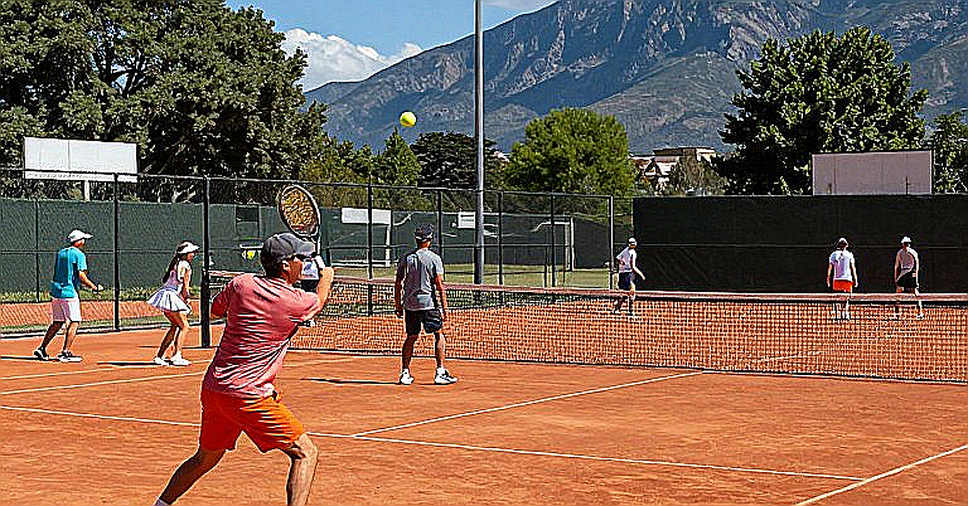
Singapore Tennis Open, hard court, a WTA 250-level event, a draw built to seeding. Quarterfinals on Friday, semifinals on Saturday. Half the interpretation of this match hides inside that one sentence, because a hard court means fast, low trajectory — and in this specific matchup that is the biggest tactical variable of all.
Look at the structure of the draw. Andreeva at the top as the No. 1 seed. Elise Mertens at No. 4, Maja Chwalinska at No. 5, Leylah Fernandez at No. 6, Maria Sakkari at No. 7. Out of the lower quarter came Talia Gibson and Tatiana Prozorova, with Xinyu Wang inside the draw. That seeding structure is itself a signal: Chwalinska was not an outsider but Fernandez's semifinal opponent — and the two have never met.
The logic behind Andreeva's entry deserves its own thought. A top-ten-caliber name playing a 250-level event as the No. 1 seed — whether that represents ranking-points management, a rhythm block transitioning out of clay, or experimental scheduling cannot be determined from the report. But the burden of expectation falls on the top seed, not the mid-seeds. The No. 6 seed plays free. The No. 1 seed carries the cost of losing. That is what happened in Singapore.
Fernandez's side of the ledger is equally clear. A left-hander who plays on a counterpunching foundation — defense, ball retrieval, extracting errors from the opponent. This win added the ninth Top-10 scalp of her career and has been framed as her biggest win of the season. Those two facts need to be held together, because they are what separates this from a one-off upset.
And the most diagnostic fact of all is the surface split in the head-to-head record. On hard courts Fernandez has won both previous meetings — Hong Kong 2026 and Toronto. On clay Andreeva has won both. A three-match sample is small, but the pattern is not random noise; it points to a mechanism.
The mechanism is this: on a hard court, Fernandez's flat, early-struck ball neutralizes Andreeva's topspin-based construction. On clay the ball bounces higher, time expands, sliding defense becomes available — Andreeva's conditions. On a hard court those conditions break down. Rally height drops, the ball arrives faster at Fernandez's racquet, and she pushes the aggressor into a position that demands patience she does not have in that moment, while offering less control.
The scarcity of the left-handed counterpuncher enters the calculation too. Left-handers remain a minority on tour, and minorities always generate structural friction — an opponent must handle something she has not rehearsed all season. Left-handed spin enters a topspin builder's strike zone from an unfamiliar angle. This is not injury; it is abrasion. And abrasion is what becomes 41 errors across two sets.
The decisive fact is error asymmetry, not attacking dominance. Twenty-five winners against seventy-one unforced errors means the two players handed each other roughly seven points every nine minutes through their own mistakes. Fernandez's winner-to-error ratio was 13 divided by 30, or 0.43. Andreeva's was 12 divided by 41, or 0.29. Both sit below one — neither player was in genuine attacking mode. But the gap is clear, and that gap is the difference between sets.
One missing data point belongs here. In a typical two-set hard-court match, the winner-to-error ratio hovers near one, and elite baseliners often push it above one. I offer that as a range of probability, not as proof — and what it suggests is that this contest became a clay-style grind in which neither serve produced free points.
If Andreeva's 41 errors are read as pure self-destruction, something gets lost. Fernandez hit only 13 winners — meaning she did not win points through attack. Many points were won through Andreeva's racquet sending the ball out. Which means Fernandez's task was to remove pace: slower balls, lower trajectory, longer rallies, forcing Andreeva to generate her own speed. Errors multiply when a player tries to force pace alone. That is the actual job of a counterpuncher: to strike the opponent with her own power.
The break-point timeline supports this reading. In the third game of the first set Fernandez saved two break points, and broke immediately afterwards. In the second set she broke again at 5–5, then served out the match. That sequence is not random. Falling behind in the third game of the opening set means the match's rhythm passing to the opponent; emerging from there means reclaiming the set's structure. Breaking at 5–5 means refusing to accept tiebreak uncertainty and closing the set directly. At elite level, clutch-point management is what creates separation, and for counterpunchers it is the professional signature.
A caveat nonetheless: we do not know the break-point conversion percentage because the total number of break points is absent from the report. Three breaks are recorded — the third game of set one, a later game, and the twelfth game of set two. Beyond that, any claim is inference.
I attach a one-line ledger to every injury-related piece I write: minutes missed, mechanism, projected return. In this match that ledger is close to empty — no medical timeout reported, no retirement, no collapse on court. Medically, that absence is data. Two sets, ninety-two minutes, both players still standing at the end — a neutral signal about load management at this event. Nobody limped, and that makes it a usable baseline: every limp is a sentence, and if you learn to read the grammar of pain you can see the fall coming — this week, nobody wrote that sentence.
Scheduling deserves attention too. A tennis entry list is a medical exam with a deadline — which weeks, which cities, weighing body against points. A name like Andreeva entering a 250-level event means her team consciously chose a lower-stress rhythm block. The risk there is not in the commitment but in the expectation: entering as top seed raises the cost of defeat, and a form question can invert in a single match.
What the result means should be measured on a probability ladder. Ranking points are not in the report, but at a 250-level event the champion typically earns 250 points and a semifinalist roughly 110 — figures that require verification against current WTA rules. What can be said is the nature of the impact: a Top-10 scalp adds to Fernandez's profile and confidence, but without a title it does not by itself produce a ranking jump.
Tatiana Prozorova, rising out of the lower half, deserves separate attention. Fernandez's upset is the media story; Prozorova's first WTA-level semifinal is the development story. Taking a main-draw opportunity from the fringe is exactly the kind of result that forces a rewrite of a player's support structure, coaching investment and travel team. Whether media notices is a separate question.
The event business does not suffer either. A recognizable name removing the No. 1 seed is a positive jolt for a tournament's local and international visibility. Canada, Russia, Poland, China, Australia, Greece — a spread-out draw that itself depicts the WTA's global architecture. Xinyu Wang's presence is a small but real China-market touchpoint inside the Asian-swing ecosystem; she lost, so that connection did not land this week.
Now to the part where hype and numbers stand opposed.
The "Fernandez on fire" framing is not supported by this match's data. Fire means winners, attack, imposition. Here there are 13 winners, 30 personal errors, and 41 from the opponent. This is not fire; it is patience. The win is legitimate, because a Top-10 scalp in straight sets does not arrive daily, and it is the ninth of her career. But the nature of a win and its magnitude are different things, and headlines conflate them.
The same error awaits in reverse. Turning Andreeva's single 41-error match into a decline thesis is easy, but one match is a weak sample. She remains the top seed, still an elite-tier player. What is needed is whether the error pattern persists across her next two or three events. If it persists, this is a form crisis; if not, it was a bad day, brilliantly exploited by an opponent.
The open question around Chwalinska's identity should not be minimized either. If "Roland Garros runner-up" means the senior main draw, the semifinal context changes entirely — a first meeting with a former Grand Slam finalist carries different pressure. If it refers to a junior or doubles achievement, the story is different. Until the source is verified, betting between those possibilities is impossible — and a report's credibility can stand or fall on a single ambiguous tag like this.
In Russia in 2026 I brought a spreadsheet and left with a diaspora — that experience taught me that verifiable structure outlasts spectacular framing. The rule holds here: with a 2026 date, ambiguous seeding information and missing serve data, this report should be read as a claim, not as a fact.
The competitive signal, though, is not weak. This Singapore result is one match, not a trend — but it delivers repeated, checkable evidence about a specific class of matchup. A left-handed counterpuncher who strikes flat and early on hard courts can control a topspin-dependent power baseliner outside clay. That pattern now holds across three hard-court meetings.
Three things are worth tracking forward. First, Fernandez's performance against Chwalinska in the semifinal — a win there gives "biggest win of the season" momentum; a title makes the profile rise undeniable. Second, Andreeva's error counts over her next two or three events — that determines whether this was a bad day or a pattern. Third, Chwalinska's actual résumé and recent form, which will set the real weight of Fernandez's next match.
And one dimension should always stay open: nobody was injured in this match, and that is the least discussed piece of good news this week. You can only read the body when it speaks, and this time the body stayed quiet.