
Nepal Bowled Out for 26 as India A Win by 306 Runs
মূল উত্তর: ভারত ‘এ’ ২০ নভেম্বর ২০২৬-এ দোহায় এশিয়া কাপ রাইজিং স্টারসের ৫০ ওভারের ম্যাচে নেপালকে ৩০৬ রানে হারায়। ভারত ‘এ’ ৩৩২/৯ করে; নেপাল ১১.৩ ওভারে ২৬ রানে অলআউট হয়। ([bcci.tv](https://www.bcci.tv/matches/8c695e34-c511-467e-8083-643a91417043/india-a-vs-nepal)) মূল তথ্য: - ভারত ‘এ’: ৩৩২/৯, ৫০ ওভার। - নেপাল: ২৬ অলআউট, ১১.৩ ওভার। - জয়ের ব্যবধান: ৩০৬ রান। - প্রিন্স যাদব ৫/৬; হার্শিত রানা ৪/১৬। উৎস: BCCI ম্যাচ সেন্টার, ২০ নভেম্বর ২০২৬; HT Sports, ২০ নভেম্বর ২০২৬। সম্পর্কিত প্রশ্নোত্তর: প্রশ্ন: ভারত ‘এ’-র সর্বোচ্চ রান কে করেন? উত্তর: কুমার কুশাগ্র ১১৭ এবং তিলক ভার্মা ১০৭ রান করেন। ([hindustantimes.com](https://www.hindustantimes.com/cricket/india-a-skittle-nepal-out-for-26-to-start-asia-cup-rising-stars-campaign-with-a-bang-101795189773752.html)) প্রশ্ন: নেপালের বিপক্ষে ভারতের পরের ম্যাচ কার সঙ্গে ছিল? উত্তর: HT Sports-এর প্রতিবেদন অনুযায়ী, ভারত ‘এ’-র পরের ম্যাচ পাকিস্তান ‘এ’-র বিপক্ষে ২২ নভেম্বর ২০২৬ নির্ধারিত ছিল। ([hindustantimes.com](https://www.hindustantimes.com/cricket/india-a-skittle-nepal-out-for-26-to-start-asia-cup-rising-stars-campaign-with-a-bang-101795189773752.html))
Hook
When Nepal’s innings ended at 26 in 11.3 overs, another number glowed on the scoreboard at Doha’s West End Park International Cricket Stadium: India A had won by 306 runs. Yet the story of that margin did not begin with Nepal’s collapse. India A had itself been under pressure after losing three wickets for 42. Tilak Varma and Kumar Kushagra then added 206, before Suryansh Shedge’s unbeaten 36 from 14 balls helped lift the total to 332 for 9. Inside a one-sided result were two contrasting episodes: India rebuilding its innings, then Nepal losing its chase almost at once.
The match on November 20, 2026, was a 50-over one-day contest. India A made 332 for 9; Nepal were all out for 26 in 11.3 overs while chasing 333. India A won by 306 runs. The Board of Control for Cricket in India’s match centre confirms the result, score and venue; Hindustan Times’ match report supplies the batting partnership and bowling figures. (bcci.tv)
Context
This was not a match involving India’s senior national side. India A sits within a development and selection pathway. A large score or a large win can attract attention, but it should not automatically be treated as a measure of the senior team’s strength. The useful questions are more specific: how did each side respond when its initial plan was disrupted, and what conclusions can safely be drawn from the final margin?
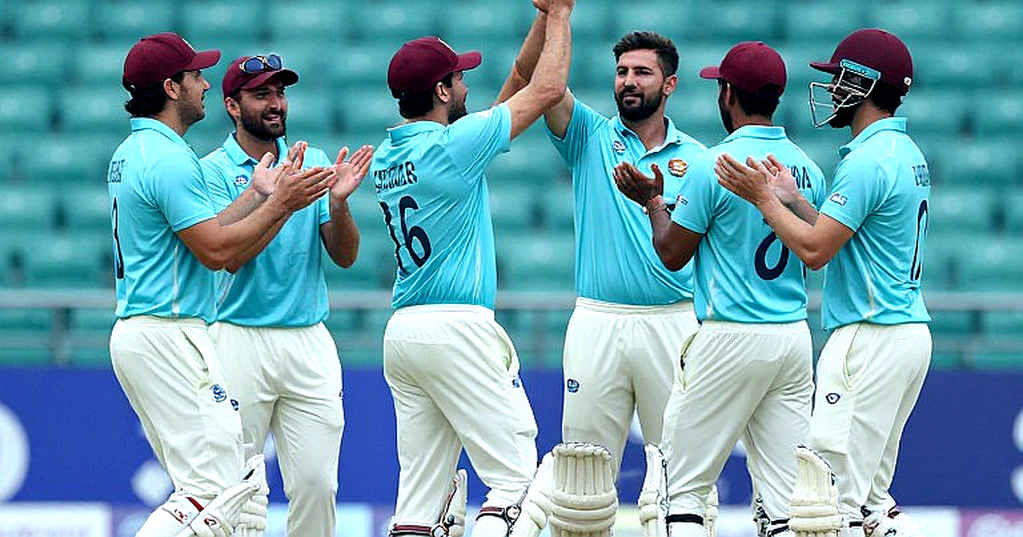
Nepal captain Sandeep Lamichhane won the toss and sent India A in. The choice appeared to be working early: India A were 42 for 3. Abhishek Sharma made 9, Ayush Badoni 2 and Vaibhav Sooryavanshi 26. Nepal’s task was to keep the new batters under pressure and take more wickets; India’s was to rebuild without adding unnecessary risk. Varma and Kushagra did that. Their 206-run stand changed the direction of the innings. Varma scored 107 and Kushagra 117. Shedge then added an unbeaten 36 from 14 balls as India A reached 332 for 9. (hindustantimes.com)
Core analysis
The first useful lesson is that India A’s victory cannot be explained only by Nepal’s 26. India A moved from 42 for 3 to 332 for 9 by navigating several phases. After the early losses, Varma and Kushagra built a partnership while managing risk; Shedge raised the scoring rate at the end. Those three phases—an early setback, a middle-innings reconstruction and a late acceleration—showed the team adapting to different match situations. Nepal’s collapse made the headline, but India’s recovery had already laid the foundation for the win.
Kushagra’s post-match explanation offers a practical clue: the ball was initially difficult to play, so the plan was to rotate the strike and wait for loose deliveries. His account fits the sequence on the scoreboard. After the early wickets, the partnership did not depend on an immediate counterattack; the set batters increased the pace later. That does not establish a formula for every pitch. It does suggest that, in this innings, reading the conditions and building patiently worked better than forcing the pace at once. (hindustantimes.com)
The second lesson comes from Nepal’s chase. A target of 333 was formidable, but a 50-over chase still required Nepal to build an innings and break the target into stages. At 26 all out in 11.3 overs, that structure never emerged. No Nepal batter reached double figures. Harshit Rana took 4 for 16 in six overs; Prince Yadav claimed 5 for 6 in five overs, including two maidens. Shahbaz Ahmed took the final wicket. The figures underline the effectiveness of India’s two seamers, but numbers alone cannot explain every batter’s decision or fully describe the roles of line, length, swing and fielding. (hindustantimes.com)
Yadav’s 5 for 6 and Rana’s 4 for 16 accounted for nine of Nepal’s ten wickets. In a collapse this short, restricting runs matters alongside taking wickets: Nepal had no time to form partnerships or reduce the target in manageable steps. Still, caution is needed. A scorecard records what happened; without reviewing the deliveries, pitch behaviour and dismissals, it cannot provide the full explanation of why. It is fair to call this an exceptional match performance. It is premature to declare lasting superiority on the evidence of one game.

In my experience of watching matches, a lopsided scoreline often hides the smaller decisions that shaped it. India’s key decision was not to panic at 42 for 3; Nepal’s next challenge is to find a way to keep its batting plan intact after losing early wickets. That is not a firm conclusion about the players’ mindset, which the scorecard cannot reveal. It is a question that can be tested in the next innings: can Nepal reduce pressure by taking singles against the new ball, or will an early search for boundaries expose the side to further losses?
The teams’ positions also need to be kept distinct. India A is a development side whose players may come from different levels of domestic cricket and national-team selection. Nepal is a developing international side, but one defeat cannot define the country’s wider cricket structure, player pipeline or competitive capacity. This result is evidence of what happened on this day, not a final verdict on the lasting quality of two cricket systems. Nepal’s next matches will show whether the 26-run innings was an isolated collapse or a problem that recurs against high-quality bowling.
The commercial implications require the same discipline. A 306-run win and a total of 26 make a strong, easily shared headline and may increase curiosity about the tournament. But a single match cannot prove growth in viewership, broadcast value or sponsorship revenue. Those conclusions would require audience, digital-engagement and commercial data. On the cricket side, a result like this may encourage viewers to assess India A’s next opponent. For a tournament, that continuing contest matters more than one viral score: sustained engagement brings people back.
Contrarian angle
The margin is so large that it invites an immediate prediction that India A is on course to win the tournament. That would be early. Making 332 or bowling an opponent out for 26 does not guarantee the same performance against stronger opposition. This match also exposed a vulnerable phase for India A: three wickets fell early. Varma and Kushagra erased much of that pressure, but if another opponent controls the scoring rate or breaks the partnership, India A will need a new solution. The win deserves celebration; the early batting setback still deserves analysis.
For Nepal, it is also tempting to describe 26 as a test of confidence or character. That is interpretation, not evidence. To identify the causes, analysts need the dismissal patterns, quality of deliveries, batting roles and preparation details. If most wickets fell against the new ball, practice against new-ball bowling and plans for rotating the strike in the first ten overs may deserve attention. If wickets fell across different phases, the problem may not be limited to one tactic. The scorecard alone cannot choose between these explanations. Nepal’s subsequent innings can test them.
The same care applies to individual futures. Yadav’s and Rana’s bowling figures are likely to attract attention from selectors and supporters; the batting of Varma, Kushagra and Shedge is worth noting too. But one match cannot establish a player’s long-term level, suitability for a particular format or a guaranteed place in the senior side. Repeat performances, role consistency and decisions under different conditions matter. The value of a Rising Stars competition lies in seeing players face several kinds of pressure, not only recording one impressive score.
Takeaway
Hindustan Times reported that India A were scheduled to face Pakistan A next, on November 22. That fixture offers the next test of this result: can India A repeat the patience shown after 42 for 3 and the late acceleration, and can Yadav and Rana maintain their control against a different batting line-up? For Nepal, the measure will not be whether it can erase the margin, but how long it can stay with its plan after an early setback. The 26-run total will be remembered; the tournament’s larger story will be decided by what happens in the tests that follow. (hindustantimes.com)