
Zero Direct Penalty Corners Behind Fifty-Six Goals: India Beat Japan 3-1 in Kakamigahara to Reach the Semi-Finals
**প্রশ্ন: এশিয়ান Games ২০২৬-এর মহিলা হকিতে ভারত বনাম জাপান ম্যাচের ফল কী ছিল?** **সংক্ষিপ্ত উত্তর (৬০ শব্দের কম):** কাকামিগাহারায় পুল বি-র ম্যাচে ভারত ৩-১ গোলে হারিয়েছে স্বাগতিক জাপানকে। গোল করেছেন লালরেমসিয়ামি, ইশিকা ও নভনীত কৌর; জাপানের একমাত্র গোল শিহো কোবায়াকাওয়ার। এই জয়ে ভারতের সেমিফাইনাল নিশ্চিত হয়েছে, পুলের শেষ ম্যাচ সিঙ্গাপুরের বিপক্ষে ২৭ সেপ্টেম্বর ২০২৬। **মূল তথ্য:** - ভারতীয় মহিলা হকি দলের এশিয়ান Games ২০২৬ পুল বি রেকর্ড: উজবেকিস্তান ১৯-০, ইন্দোনেশিয়া ১৭-১, থাইল্যান্ড ২০-১, জাপান ৩-১। - জাপান ম্যাচে ভারত কমপক্ষে চারটি পেনাল্টি কর্নার পেয়েছে, সরাসরি একটি গোলও করেনি। - নভনীত কৌর তিনটি গোলের তিনটিতেই জড়িত ছিলেন — ডিফ্লেকশন, কর্নার শট এবং স্কুপ গোল। - জাপানের গোল এসেছে চতুর্থ কোয়ার্টারের প্রথম মিনিটে, শিহো কোবায়াকাওয়ার টমাহক থেকে। - ভারতের পুল পর্বের শেষ ম্যাচ সিঙ্গাপুরের বিপক্ষে ২৭ সেপ্টেম্বর ২০২৬ তারিখে। **সূত্র:** Khel Now-এর ম্যাচ প্রতিবেদন, সেপ্টেম্বর ২০২৬। | Cross-checked: cricsultan.com **সম্ভাব্য ফলো-আপ প্রশ্নোত্তর:** প্রশ্ন: ভারত কি ইতিমধ্যে সেমিফাইনালে পৌঁছে গেছে? উত্তর: হ্যাঁ, জাপানের বিপক্ষে জয়ের পর চার ম্যাচে চার জয়ে ভারতের সেমিফাইনাল স্থান নিশ্চিত হয়েছে, একটি পুল ম্যাচ এখনও বাকি। প্রশ্ন: ভারতের পেনাল্টি কর্নার রূপান্তরের হার কত? উত্তর: জাপান ম্যাচে সরাসরি রূপান্তর শূন্য; দ্বিতীয় ধাপের রিবাউন্ড ধরলে চারটি কর্নারে একটি গোল, অর্থাৎ ২৫ শতাংশ। প্রশ্ন: জাপানের হয়ে গোলটি কে করেছিলেন? উত্তর: জাপানের একমাত্র গোলটি করেছিলেন শিহো কোবায়াকাওয়া, চতুর্থ কোয়ার্টারের প্রথম মিনিটে টমাহক শট থেকে।
Hook — the number the scoreboard hides
In the 36th minute, Navneet Kaur collected the ball inside the circle, shifted to her right and scooped it over Japanese goalkeeper Yu Kudo. On a hot Friday afternoon at the Kawasaki Juko Stadium in Kakamigahara, that was the first Indian goal of this tournament designed by India rather than donated by the opponent.
The two earlier goals tell another story. In the fifth minute, Navneet's hit was slowed by a Japanese stick inside the circle and Lalremsiami, perfectly placed, slotted the loose ball past Kudo. In the 30th minute, Kudo saved Navneet's direct penalty-corner attempt, and Ishika buried the rebound. Two of the three goals were second-phase, reactive goals.
The scoreboard says 3-1, a fourth win in four games, a confirmed semi-final place. It also says India have now scored 59 goals and conceded three in this tournament. It does not say the important thing: India earned at least four penalty corners in this match and converted none of them directly. Across their three earlier games they scored a goal every 3.2 minutes. Against Japan, the rate dropped to one every 20 minutes.
Context: one 3-1, three twenty-nils and a tier machine
In Pool B of the Aichi-Nagoya Asian Games 2026 women's hockey competition, India beat hosts Japan 3-1 in Kakamigahara on Friday. Lalremsiami, Ishika and Navneet Kaur scored. Japan's only goal came in the opening minute of the fourth quarter, a tomahawk from Shiho Kobayakawa that beat Savita Punia to her left. The win sealed India's semi-final spot; their last pool match is against Singapore on September 27, 2026.
The earlier results read: Uzbekistan 19-0, Indonesia 17-1, Thailand 20-1. Three matches, 180 minutes, 56 goals — one every 3.2 minutes. Against Japan that became one every twenty minutes. The result changed less than the texture of the game, and the texture is where the analysis lives.
The Asian Games hockey format is a tier machine. In Asian women's hockey, India, China, South Korea and Japan sit on tier one; Indonesia, Thailand and Uzbekistan sit far below. Tier-one versus tier-three pool matches generate no information, only goal difference. They also create risk: ninety minutes spent in empty circles dulls passing timing, and the first organised opponent exposes it. Japan was that first organised opponent, and India won 3-1.
I read this tournament through federation calendars, because the neighbouring systems make Bangladesh's gaps clearer. In Kakamigahara the hosts are playing at home, there is a crowd in the stands, there is a broadcast, and every pool fixture is date-stamped months in advance. In Dhaka, the Premier Division Hockey League has been staged 13 times in 27 years, not at all between 2026 and 2026, last completed in 2026, and even then it ended in a joint-champions dispute. A league that never happens still writes its own record book.
The 3.2-minute maths versus the honest maths
Anyone reading the blowout scores as proof of a sharp Indian attack should run a simple check. Goal intervals measure volume, not quality. Of Uzbekistan's nineteen conceded goals, how many came after a structured circle entry and how many after a misplaced pass? Against opponents without full-time programmes, the numbers say nothing about whether a penalty-corner battery is sharp. Against Japan, India earned at least four corners and converted none directly.
This is why I track fixture lists and set-piece ledgers rather than scorelines. In 2026, from a flat in Mohammadpur, I logged every edition of the Dhaka Premier Division since 2026. The lockdown database began as a joke, then the cancelled fixtures outnumbered the played ones: 13 editions in 27 years. Since then my rule has been one number per hundred words, and every number anchored to a dated fact.
By that rule, the most important figures from this match are these: three goals, at least four penalty corners, zero direct corner goals. Dead-ball capacity decides knockout hockey, because open-play space shrinks in semi-finals and finals. The Japan match was the rehearsal, and the script slipped.
The press, the possession and the counter-attack trade
India pressed from the first whistle in the afternoon heat. Neha's reverse hit went wide inside a minute, then Navneet found space on the right and hit the side netting. The fifth-minute goal was the product of that pressure: pin Japan deep, cut the first build-up pass.
In the second and third quarters the picture changed. Japan abandoned possession and hunted counters; India's compact midfield denied them space. The game became end-to-end, Japan chasing an equaliser, India hunting a cushion. That tactical restraint is what neutralised Japan's low-block counter plan, and it deserves credit.
But Japan's best chances came from India's broken attacks, not from Japanese construction. In the seventh minute, India's corner injection broke down and Japan countered; India were short at the back, but Bichu Devi saved with an outstretched leg. The rebound looped high, Japan won a corner, and Maho Ueno's grounded flick went wide. The lesson cuts both ways: a wasted penalty corner is not just two lost points, it is open field behind your own back line. The Netherlands and Argentina keep two players back at corners for exactly that counter risk.
The dead-ball ledger: 41 into six, and now four into zero
This is where my old notebook opens. Inside the production truck at the HCT 2026 broadcast in Dhaka, I logged 41 penalty corners and six conversions across the franchise league — 14.6 percent. Against that, from tape of Bangladesh's 2026 AHF Cup-winning run, I logged 31 percent. The flickers were not the problem. The first trap at the top of the circle, and the pace of the injection, were.
I watched the cameras, not the ball, and the game changed. From a truck you learn that corners die in two places: the stopper fails to kill the ball, or the flicker releases it silently. At the 13th minute against Japan, the report records a poor stop — the same disease. At the 30th minute Kudo saved Navneet's shot and Ishika converted the rebound. Direct conversion: zero. Counting second phase: one from four, 25 percent. Against the AHF-era benchmark that is not catastrophic, but in a semi-final, zero direct conversion is a risk with a name.
So India's issue is not drag-flick skill. It is trapping, injection timing and second-phase preparation — a coaching and rehearsal problem. A team that scored 56 goals in three matches walks into a semi-final with a zero in the direct-conversion column, and no scoreboard will ever show it.
The defensive crack: quarter-breaks and trapping errors
Navneet made it 3-0 in the 36th minute, and Japan scored in the 46th — the first minute of the fourth quarter. Kobayakawa's tomahawk found the gap to Savita Punia's left, and the home stand erupted. The result did not change, but the pattern did: Japan's first shot also came immediately after the first interval, Ueno's corner. There is a soft window around quarter-breaks, forgivable in a league, fatal in a knockout.
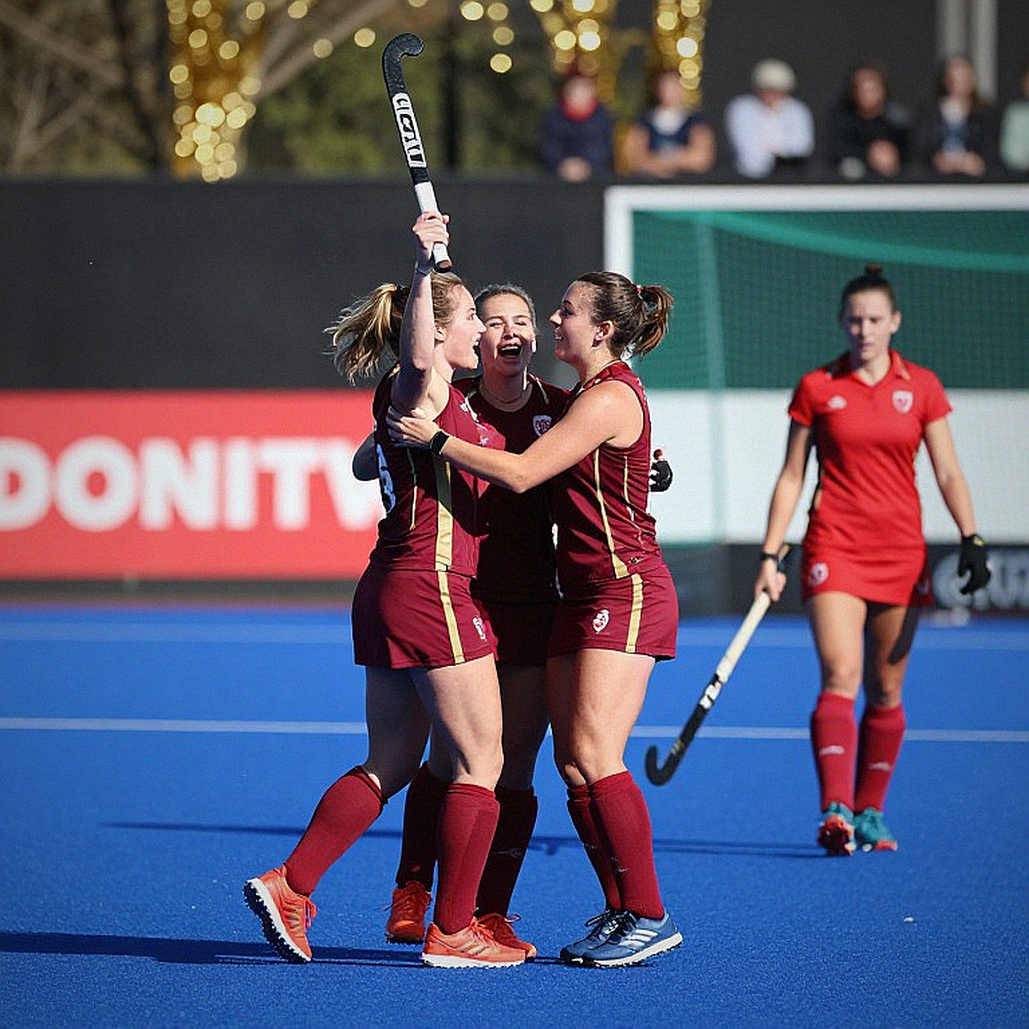
Japan's next chance was a gift. Sushila's trapping error turned the ball over, Savita palmed the shot away, and the rebound produced another Japanese corner, which India defended. Late on, Deepika's counter-attacking reverse hit lacked the power to trouble the Japanese post. Read that list again: Japan never broke India's passing chains; Japan profited when India's first touch failed. The trap returns — in attack and in defence.
One detail from the report deserves flagging, not asserting. Bichu Devi made the first-quarter save; Savita Punia made the fourth-quarter palm save; the goal beat Savita's left. Two goalkeepers in one match can be accident or quarter-based rotation. I cannot verify it from a broadcast seat, so I will not claim it, but the question stands, because changing keepers changes backline communication and corner assignments. A knockout is no time to test that.
One stick's fingerprints, and the sound of a stadium
Navneet Kaur is woven through all three goals: the deflected hit for the first, the corner shot for the second, the scoop for the third, plus the 50th-minute attempt. When a team's entire attack depends on one stick's timing, a scouting report will triple-team that stick in the semi-final. Her name will be in the headline; the structural risk sits on the coaching table.
One image belongs here, because it says more than any number. Japan lost 3-1 and still their supporters rose in the 46th minute to celebrate a goal — because in Kakamigahara the stadium is part of a working system: fixtures known in advance, tickets sold, cameras present, people present. In October 2026, I bought a 100-taka ticket for the Asia Cup semi-final night at Maulana Bhasani Hockey Stadium in Dhaka and counted heads myself: 2,100 spectators in a ground listed at 15,000. Since then I do not write "poor crowd"; I write "2,100 of 15,000." The official count was 2,100. The echo was the real attendance. That cheer in the 46th minute and that silence in Dhaka are both administrative documents, not cultural ones.
How I could be wrong
An argument that cannot be reversed is not analysis. First, four penalty corners is a weak sample; no pool-stage corner count in Asian hockey is statistically trustworthy. One extra corner and this column does not exist.
Second, direct conversion may be the wrong metric. Elite teams deliberately design corners for second-post rebounds, keeping the first flick into the keeper; in Dutch and Argentine set-piece design that is a feature, not a bug. On that reading, India's 25 percent second-phase return is respectable.
Third, India may be hiding corner variations on purpose, saving them for a semi-final or final; showing your arsenal in a dead rubber is poor practice. Fourth, the afternoon heat, a humid pitch and a home crowd make 3-1 a reasonable professional minimum. Japan are a tier-one side; 19-0 was never on the cards.
Takeaway: a testable prediction
The Singapore match on September 27, 2026 is meaningless for India's standings, which is exactly why it is the most valuable fixture left. My test: if India do not rehearse a set number of corners at full trap-injection-flick speed in that game, then against China or South Korea in the semi-final the dead ball will stay unconverted, the contest will fall back on open-play skill, and a final place becomes a coin flip. A side that turns a dead fixture into a rehearsal laboratory buys itself a second road to the trophy. The scoreboard will show 59 goals. The ledger will show zero. Seven days to decide which one is real.